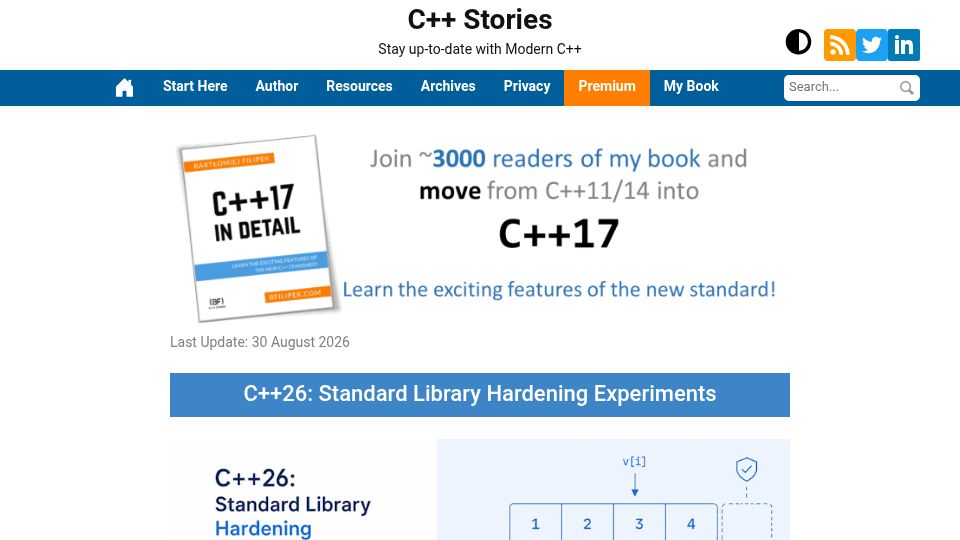
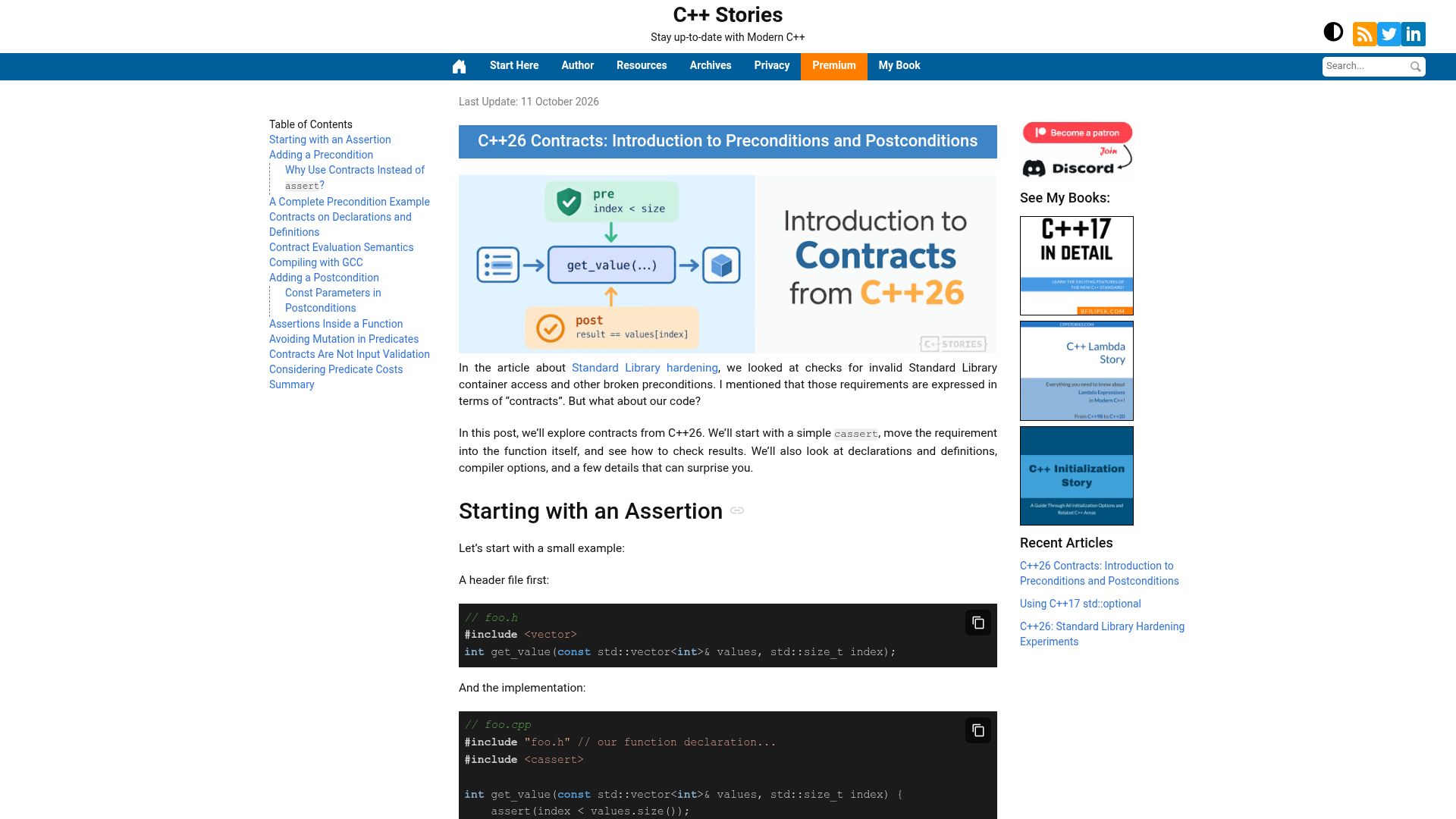
First screen, captured .
Looks similar
Related stories
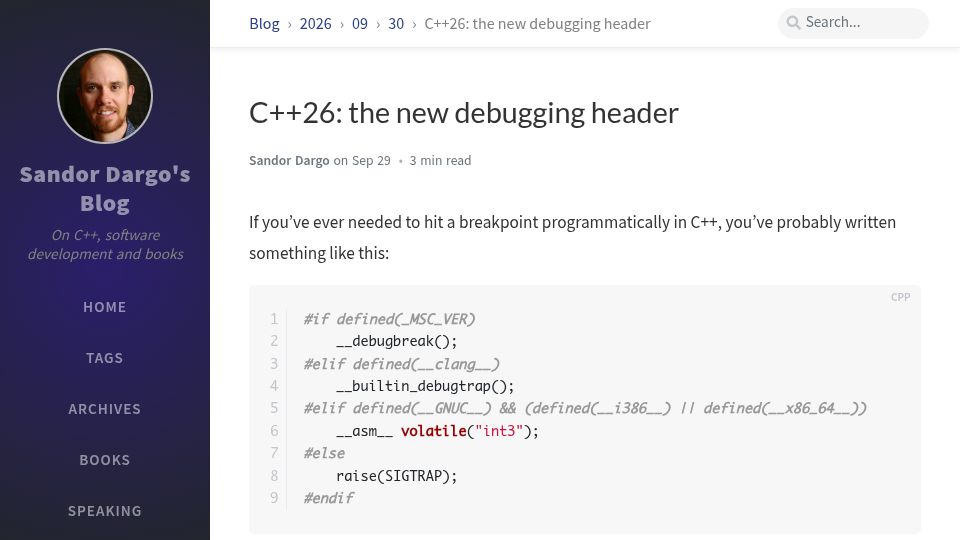
C++26: The New Debugging Header(sandordargo.com)
98 points by jandeboevrie | 23 comments
Blog post by Sandor Dargo introducing the C++26 <debugging> header for programmatic breakpoints, replacing compiler-specific code like __debugbreak.
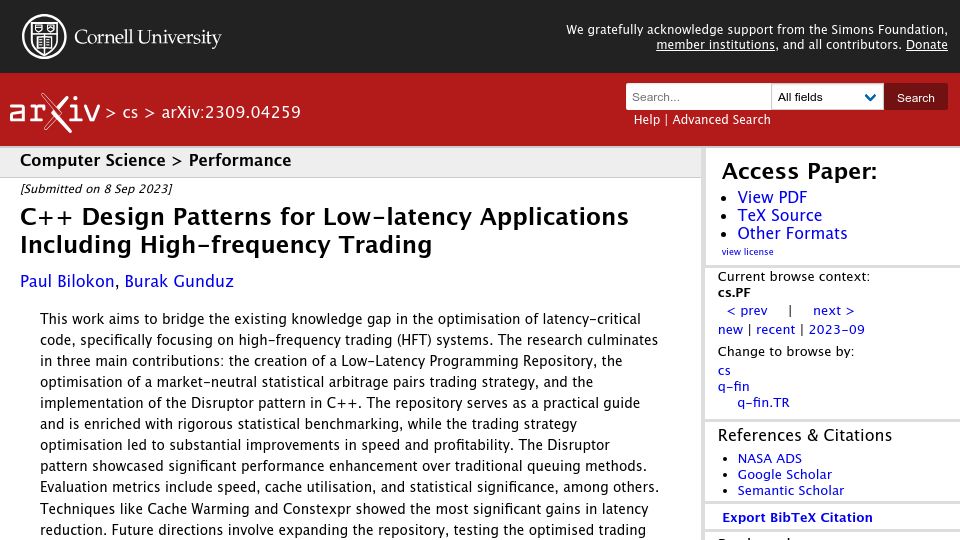
C++ patterns for low-latency applications including high-frequency trading(arxiv.org)
343 points by chris_overseas | 200 comments
arXiv paper presenting C++ design patterns and benchmarks for low-latency code in high-frequency trading, including a Disruptor pattern implementation.
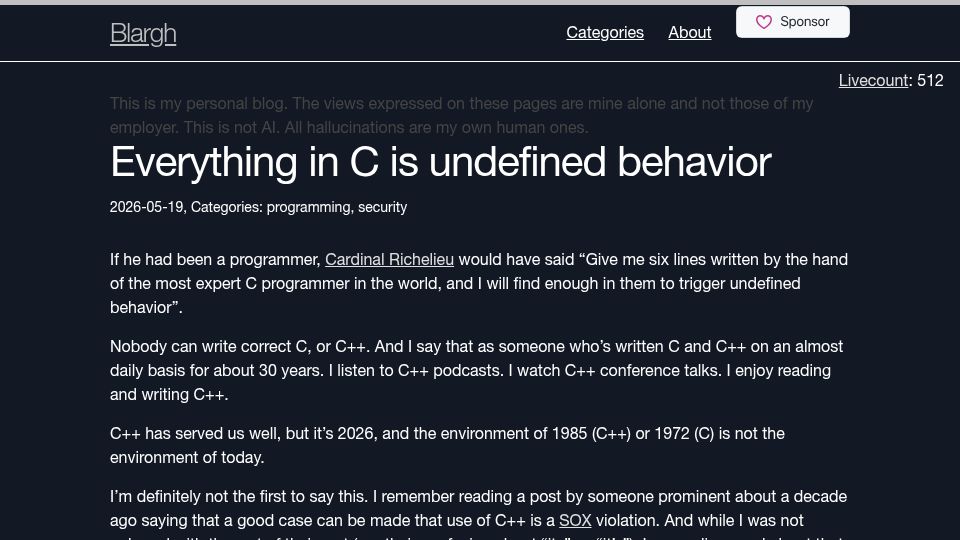
Everything in C is undefined behavior(blog.habets.se)
459 points by lycopodiopsida | 598 comments
Personal blog post arguing that nobody can write correct C or C++ because nearly all code triggers undefined behavior, and that the languages are outdated.
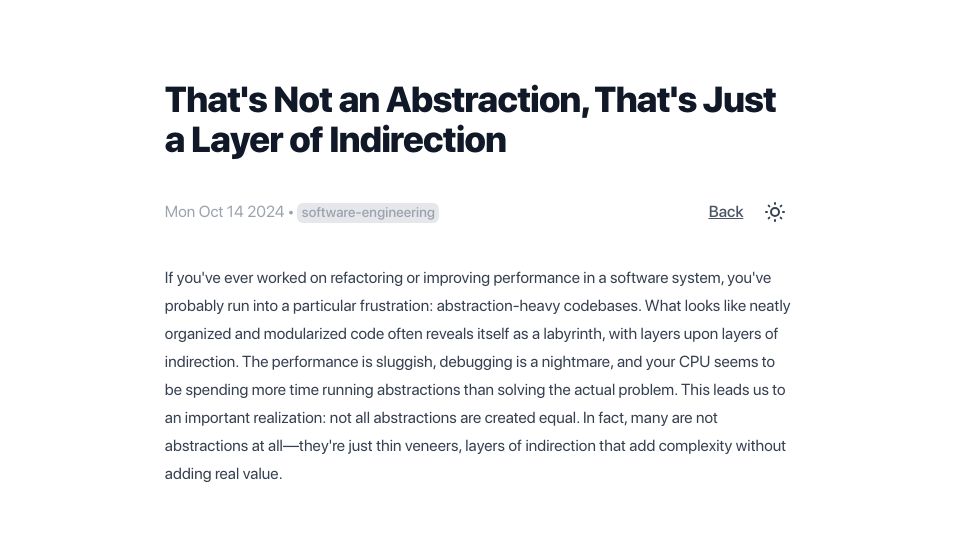
That's not an abstraction, that's a layer of indirection(fhur.me)
546 points by fagnerbrack | 213 comments
A blog post arguing that many so-called abstractions in codebases are merely layers of indirection that add complexity and hurt performance without real value.
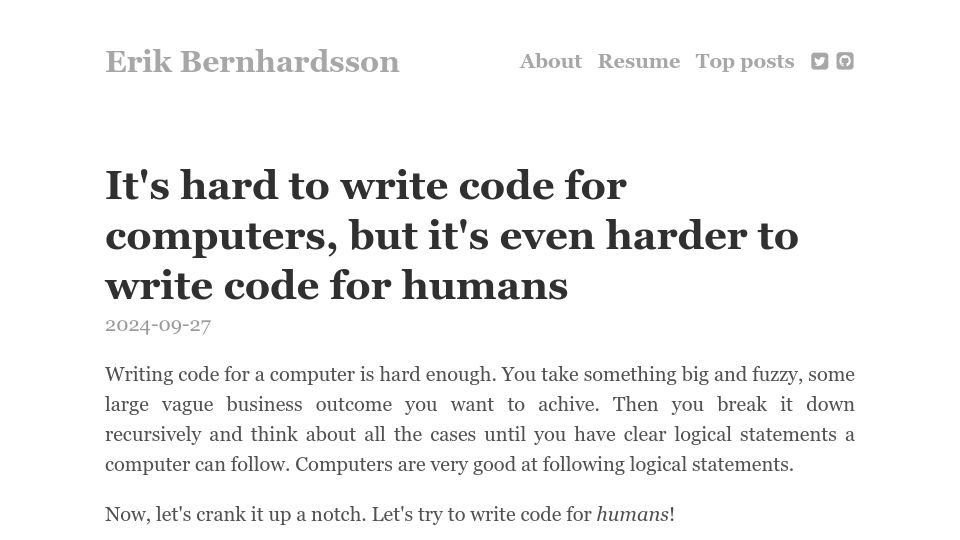
It's hard to write code for computers, but it's harder to write code for humans(erikbern.com)
429 points by imartin2k | 131 comments
Erik Bernhardsson's blog post arguing that writing code for humans, such as libraries, APIs and tools other developers use, is harder than writing code for computers.
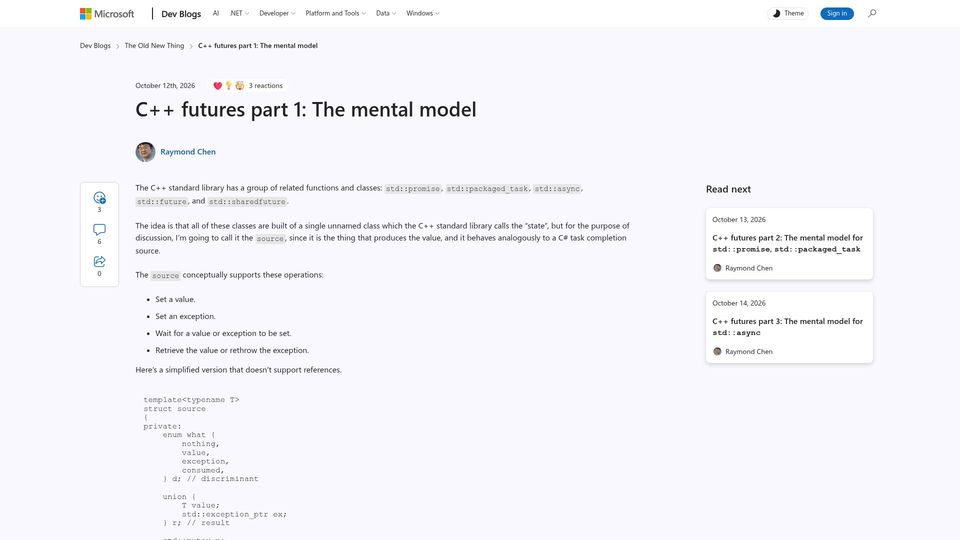
C++ futures part 1: The mental model(devblogs.microsoft.com)
56 points by ibobev | 11 comments
Raymond Chen's Old New Thing post explaining the shared-state mental model behind C++ std::future, std::promise, and std::async with a simplified implementation.