
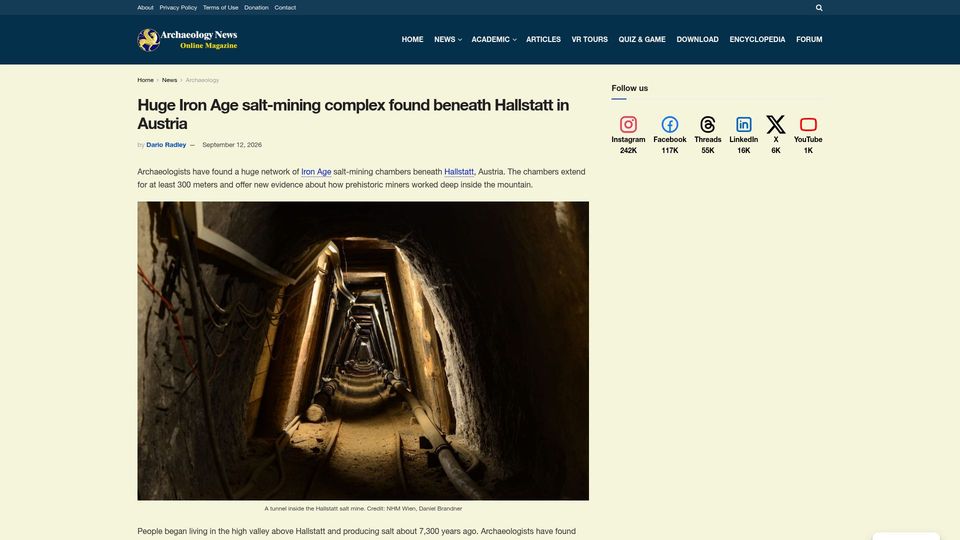
First screen, captured . Hover to scroll the page, or open the video.
Full page
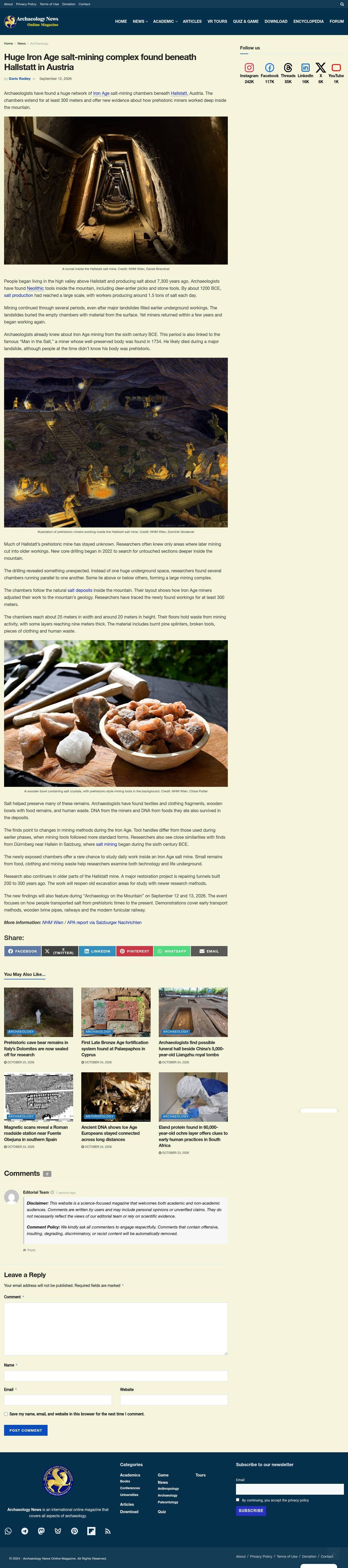
Captured . Click for the whole screenshot.
Looks similar
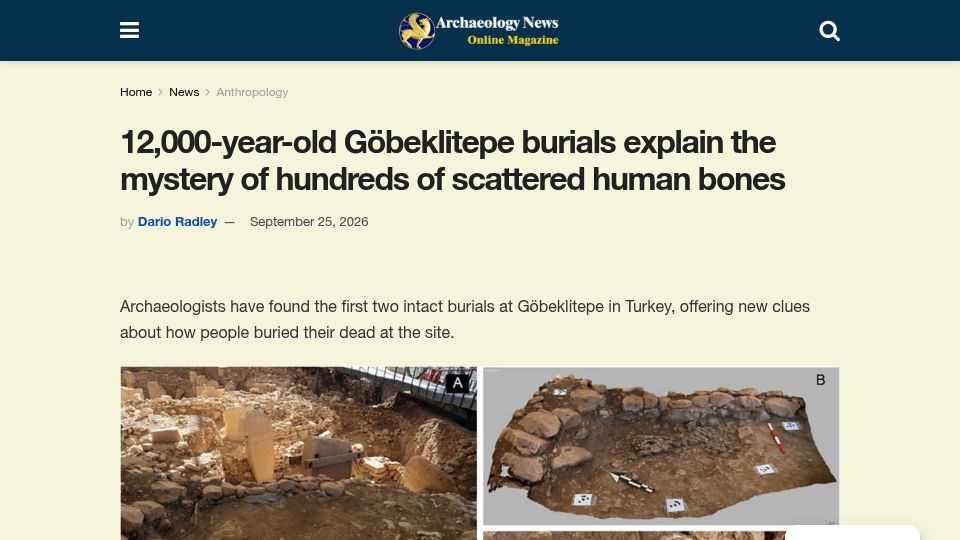
12,000-year-old Göbeklitepe burials explain scattered bones(archaeologymag.com)
154 points by yusufaytas | 43 comments
Archaeology News article reporting the first two intact burials found at Göbeklitepe in Turkey and what they suggest about the site's scattered human bones.
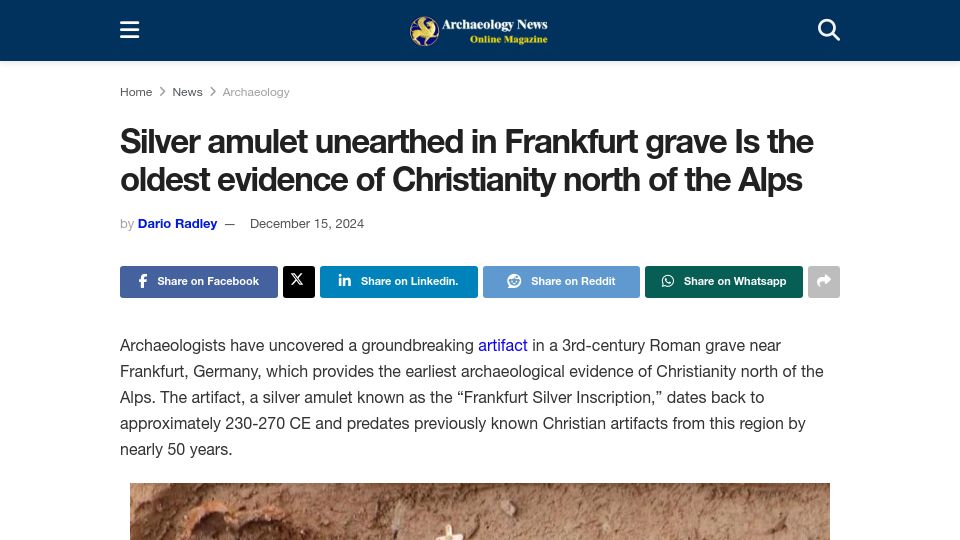
Archaeologists find 3000-year-old sword, exceptionally well preserved(newsingermany.com)
336 points by janpot | 164 comments
News article reporting that archaeologists in Germany found an exceptionally well-preserved 3,000-year-old sword.

The Assyrian Renaissance(archaeology.org)
20 points by Caiero | 2 comments
Related stories
Archaeologists find 3000-year-old sword, exceptionally well preserved(newsingermany.com)
336 points by janpot | 164 comments
News article reporting that archaeologists in Germany found an exceptionally well-preserved 3,000-year-old sword.
Why the Bronze Age Collapsed(worksinprogress.news)
3 points by measurablefunc | 2 comments
A Works in Progress essay examining the causes of the Late Bronze Age collapse of Mediterranean civilizations.
Scandinavia's first farmers slaughtered hunter-gatherer population, DNA suggests(phys.org)
55 points by optimalsolver | 79 comments
Phys.org news article on ancient DNA research suggesting Scandinavia's first Neolithic farmers violently replaced the existing hunter-gatherer population.

Late Bronze Age Collapse(acoup.blog)
409 points by dmonay | 287 comments
A blog post on A Collection of Unmitigated Pedantry giving a very brief introduction to the Late Bronze Age Collapse.
Early Europeans ate seaweed for thousands of years(smithsonianmag.com)
389 points by Brajeshwar | 215 comments
Smithsonian Magazine news article on research finding seaweed and aquatic plant biomarkers in ancient European dental plaque, showing millennia of seaweed eating.
Germany transforms former coal mines into Europe's largest lake landscape(euronews.com)
178 points by ohjeez | 96 comments
News article about Germany converting abandoned lignite coal mines into a network of artificial lakes forming Europe's largest man-made lake landscape.