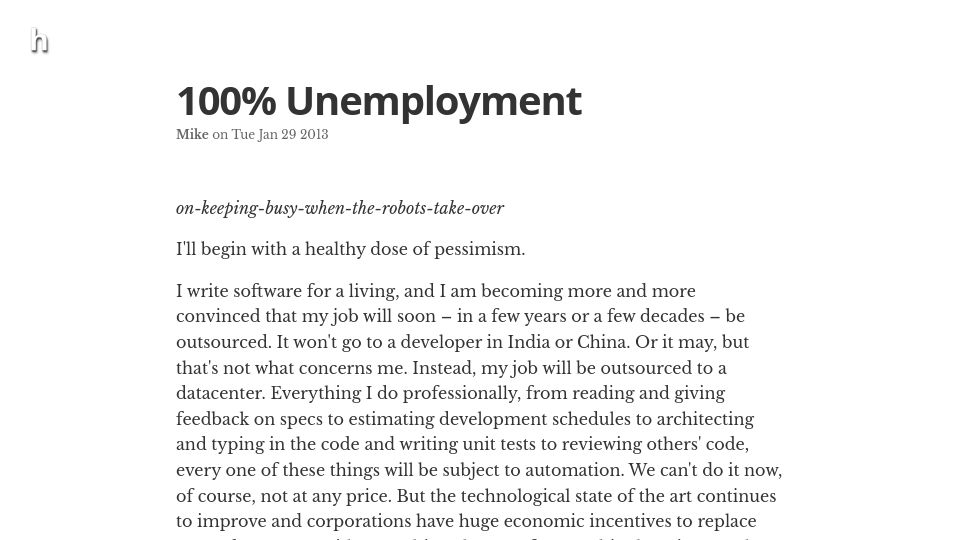
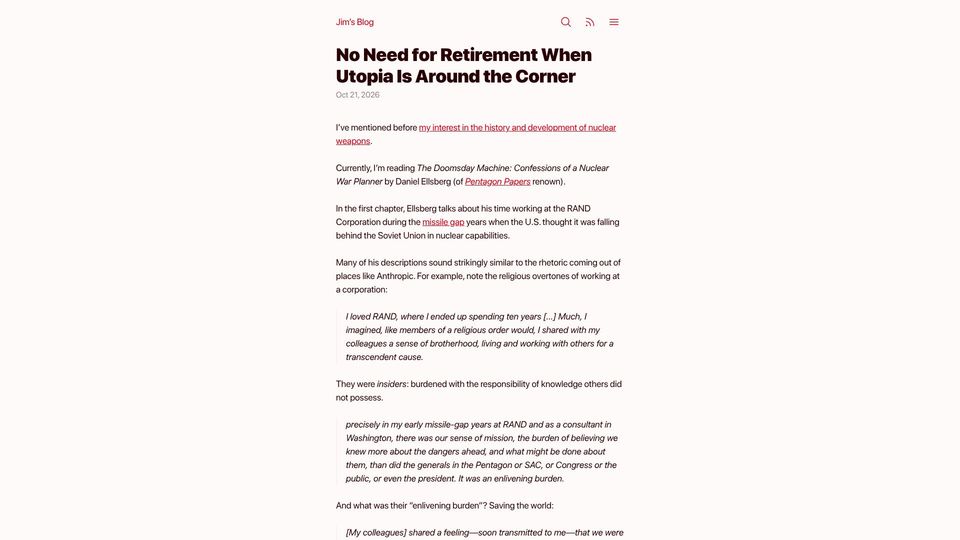
First screen, captured . Hover to scroll the page, or open the video.
Full page
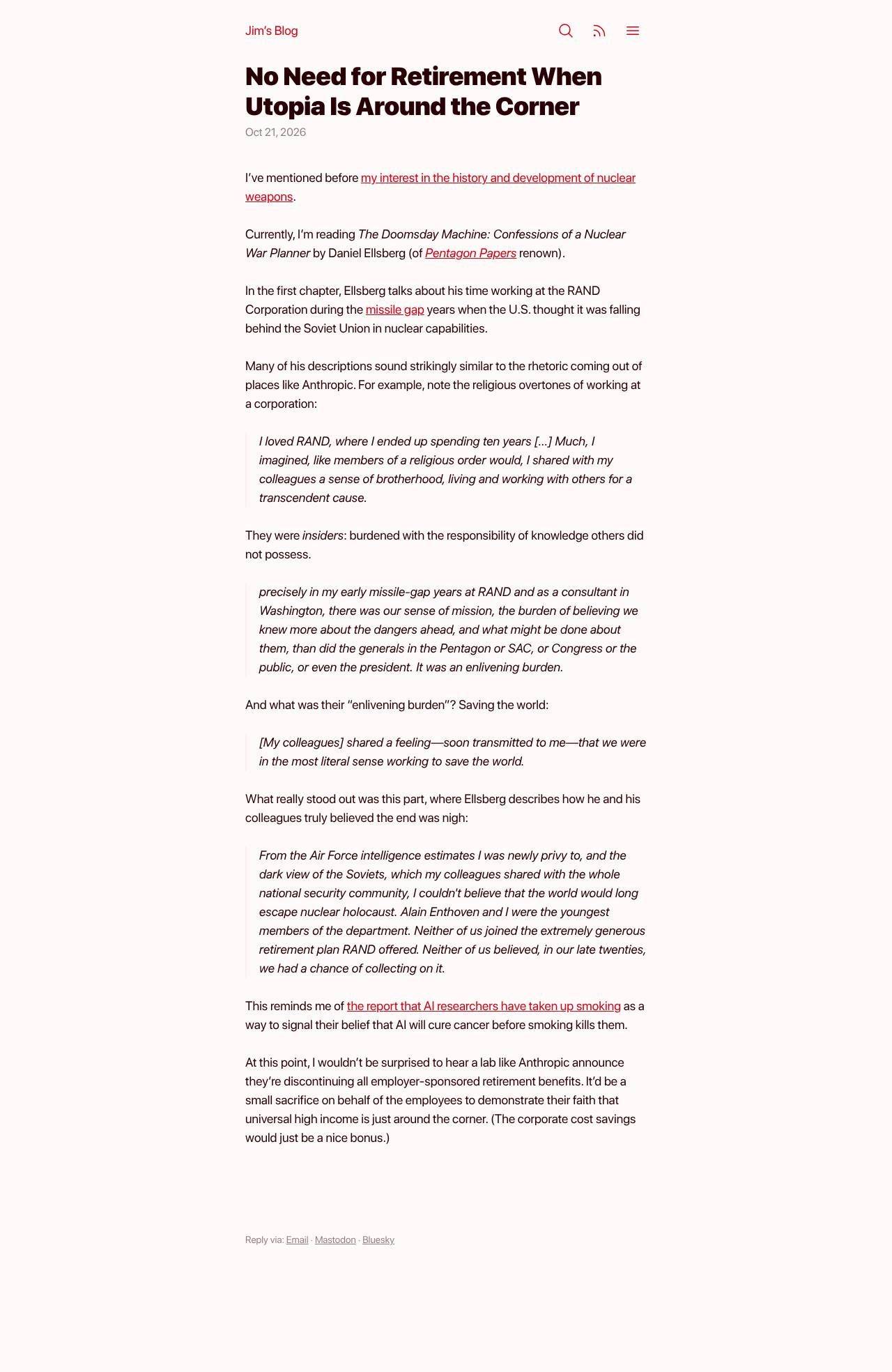
Captured . Click for the whole screenshot.
Looks similar

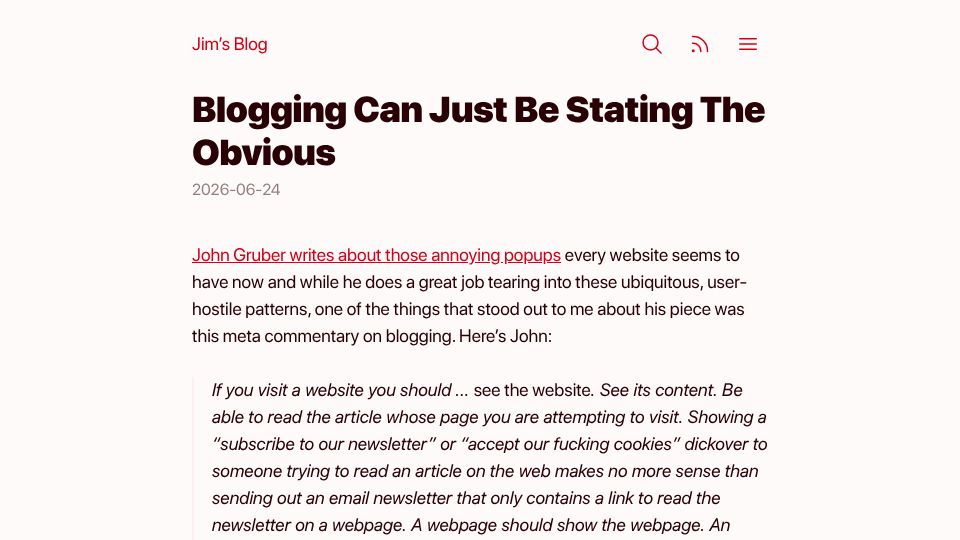
Blogging can just be stating the obvious(blog.jim-nielsen.com)
430 points by Curiositry | 124 comments
Jim Nielsen's blog post reflecting on John Gruber's critique of website popups and arguing that blogging can simply be stating the obvious.
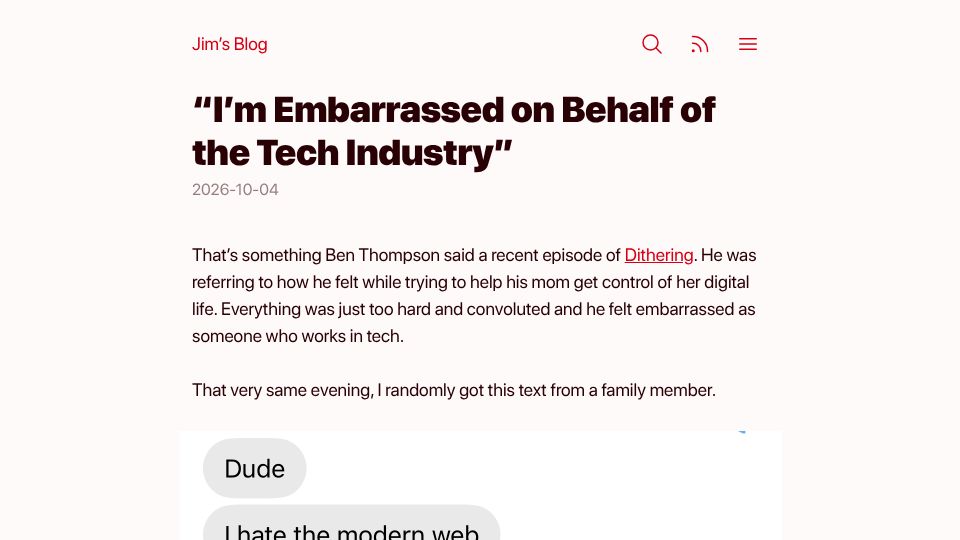
"I'm Embarrassed on Behalf of the Tech Industry"(blog.jim-nielsen.com)
37 points by Brajeshwar | 15 comments
Jim Nielsen blog post reflecting on Ben Thompson's remark about tech being too convoluted, sparked by a family member's text complaining about the modern web.
Related stories
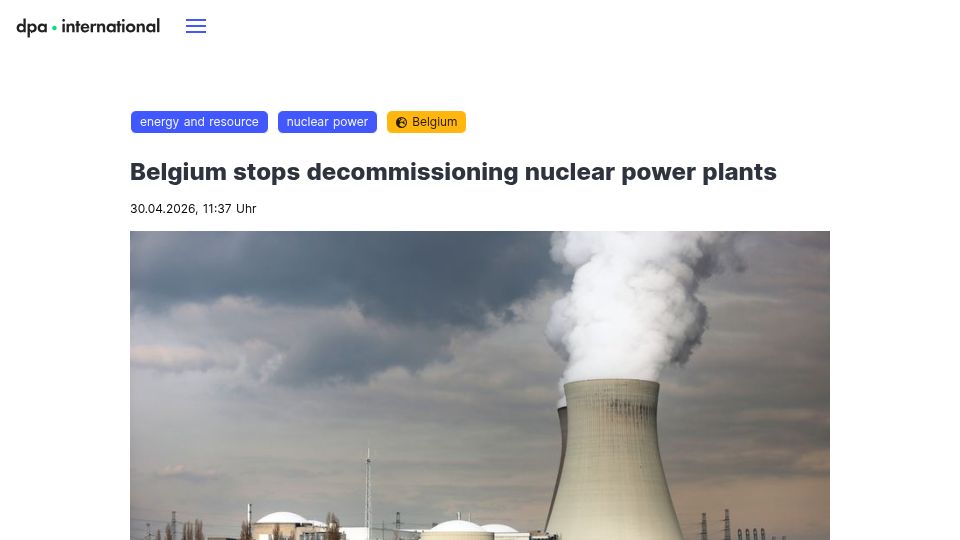
Belgium stops decommissioning nuclear power plants(dpa-international.com)
828 points by mpweiher | 844 comments
A dpa International news report that Belgium is halting the decommissioning of its nuclear power plants.
EU court rules nuclear energy is clean energy(weplanet.org)
942 points by mpweiher | 948 comments
A WePlanet blog post reporting that an EU court ruled nuclear energy counts as clean energy.
AI doesn't need 'superintelligence' or evil intent to start a nuclear war(thebulletin.org)
11 points by bookofjoe | 3 comments
Bulletin of the Atomic Scientists article arguing AI could trigger nuclear war without superintelligence or malicious intent; the screenshot shows a different article on Trump-Xi strategic stability.
Canada plans 'nuclear renaissance' with up to 10 reactors built by 2040(cbc.ca)
518 points by geox | 358 comments
CBC News article on Canada's federal nuclear strategy planning up to 10 new reactors by 2040, potentially costing over $100 billion.
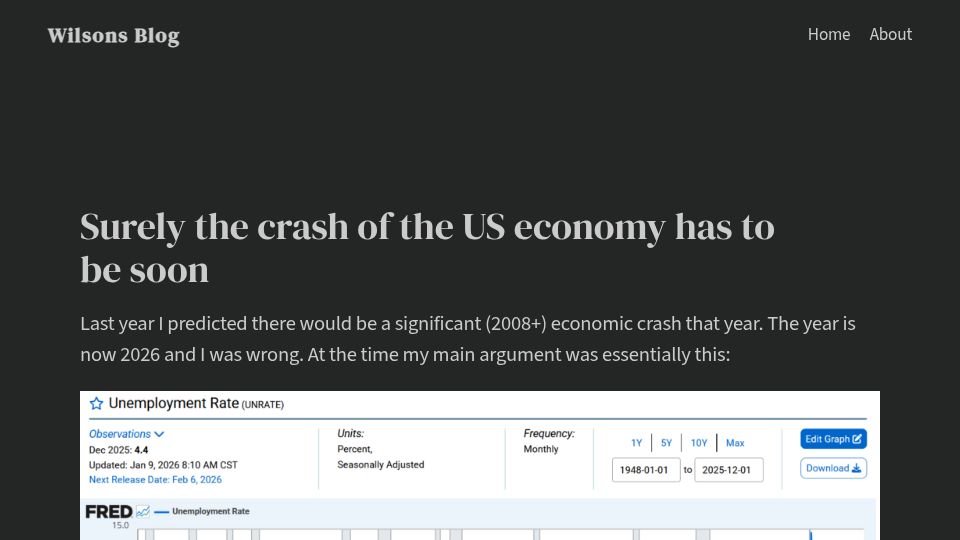
Surely the crash of the US economy has to be soon(wilsoniumite.com)
466 points by Wilsoniumite | 597 comments
A personal blog post revisiting the author's failed prediction of a 2025 US economic crash and arguing a crash may still be coming, using data such as FRED unemployment charts.
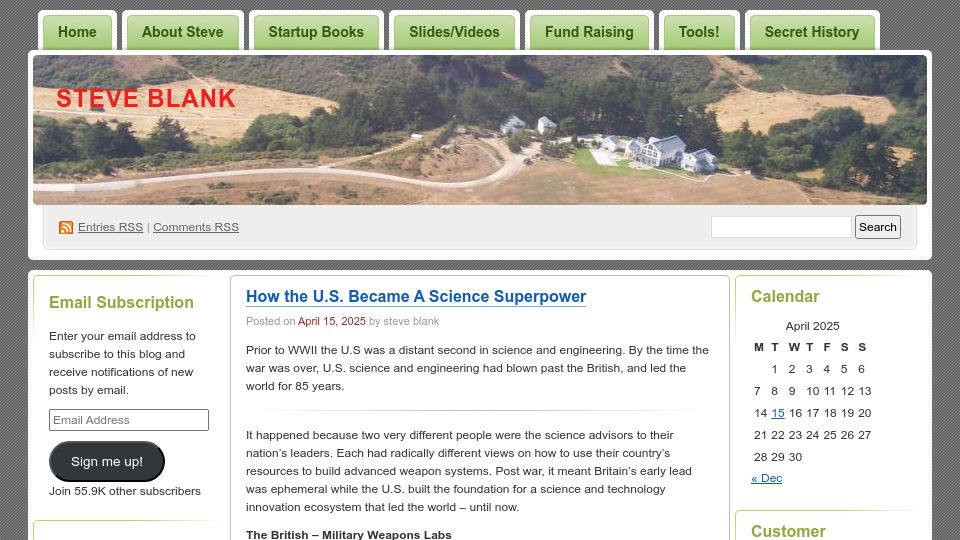
How the U.S. became a science superpower(steveblank.com)
420 points by groseje | 407 comments
Steve Blank blog post on how WWII-era science advisors and policy choices made the U.S. a science and engineering superpower while Britain fell behind.