
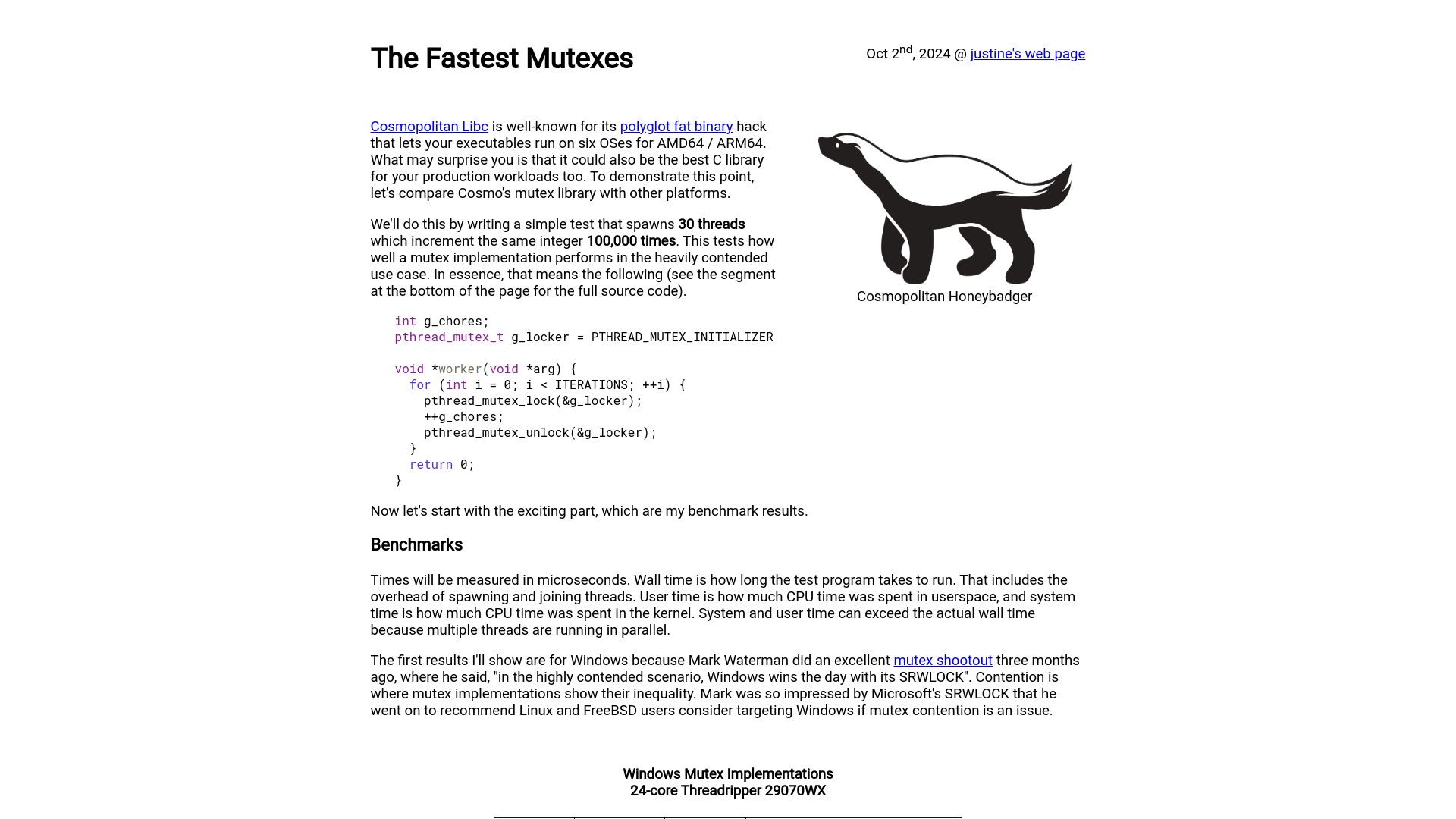
Cosmopolitan Third Edition(justine.lol)
1100 points by jart | 220 comments
Justine Tunney's announcement of Cosmopolitan libc version 3.0.1, featuring a new linker for building fat binaries that run on multiple OSes and architectures.
First screen, captured .
1100 points by jart | 220 comments
Justine Tunney's announcement of Cosmopolitan libc version 3.0.1, featuring a new linker for building fat binaries that run on multiple OSes and architectures.

407 points by jart | 214 comments
Justine Tunney's blog post surveying surprising lexical syntax quirks across 42 programming languages learned while building a syntax highlighter for llamafile.
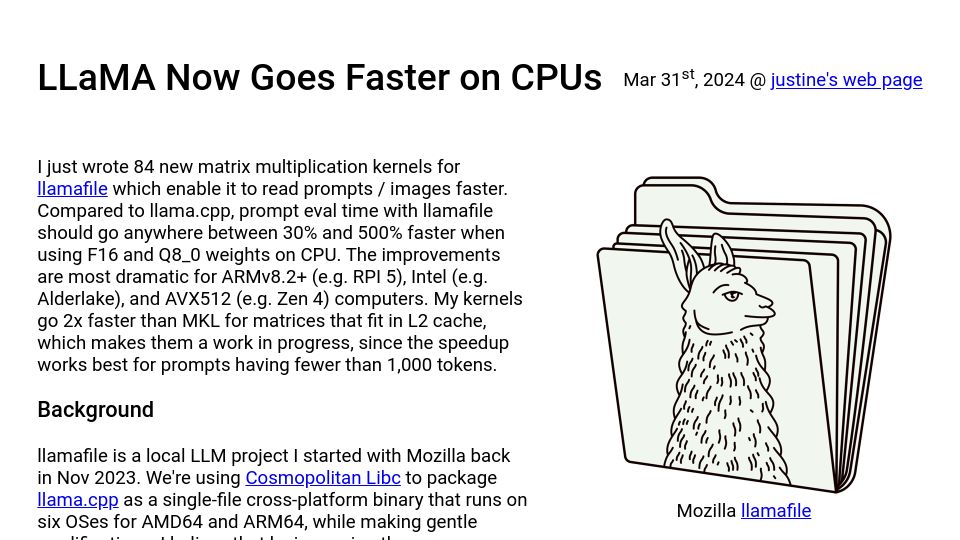
1286 points by lawrencechen | 413 comments
Justine Tunney's blog post describing 84 new matrix multiplication kernels that make llamafile prompt evaluation 30-500% faster on CPUs than llama.cpp.
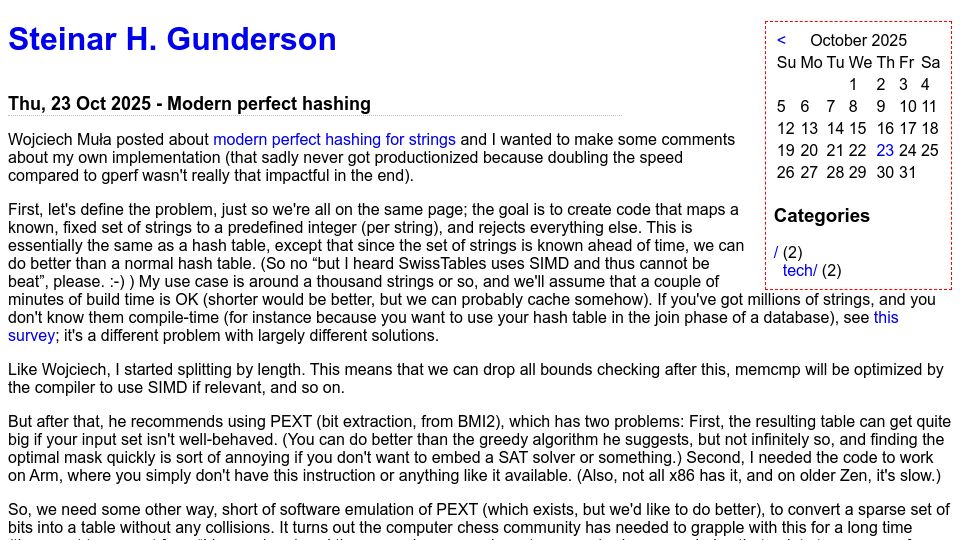
103 points by bariumbitmap | 17 comments

265 points by severine | 54 comments

236 points by grappler | 59 comments
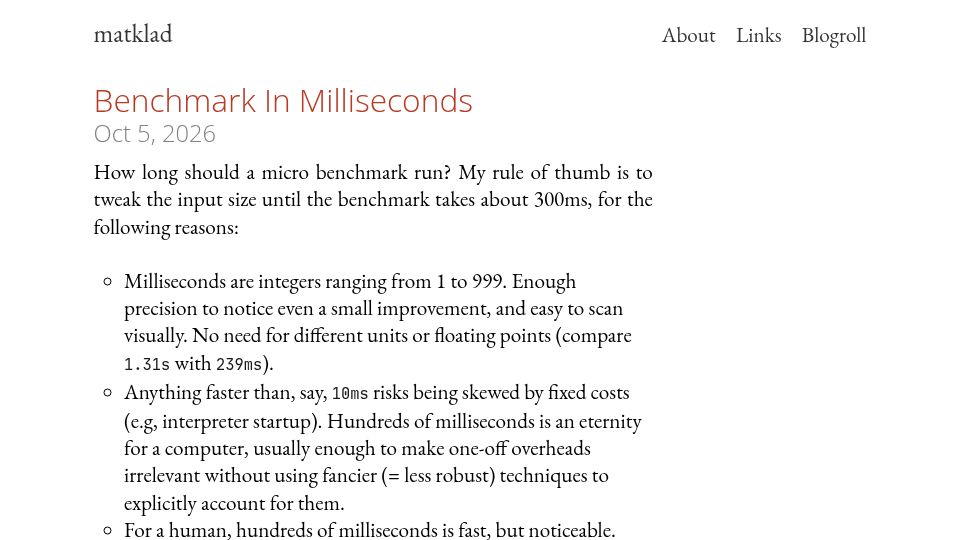
143 points by surprisetalk | 47 comments
A blog post by matklad arguing that micro benchmarks should be sized to run around 300 milliseconds, explaining the reasons for this rule of thumb.

329 points by dochtman | 437 comments
Trifecta Tech Foundation blog post announcing zlib-rs 0.4.2 and benchmarking its decompression and compression speed against C implementations zlib-ng and zlib-chromium.

741 points by quii | 553 comments
Chris James' blog post arguing that HTMX offers a simpler alternative to SPA frameworks like React and Angular for building smooth web applications.

244 points by dom96 | 179 comments
Blog post by Dominik Picheta introducing KillSwitch, a programming language he designed so that large language models cannot use it.
372 points by p1esk | 69 comments
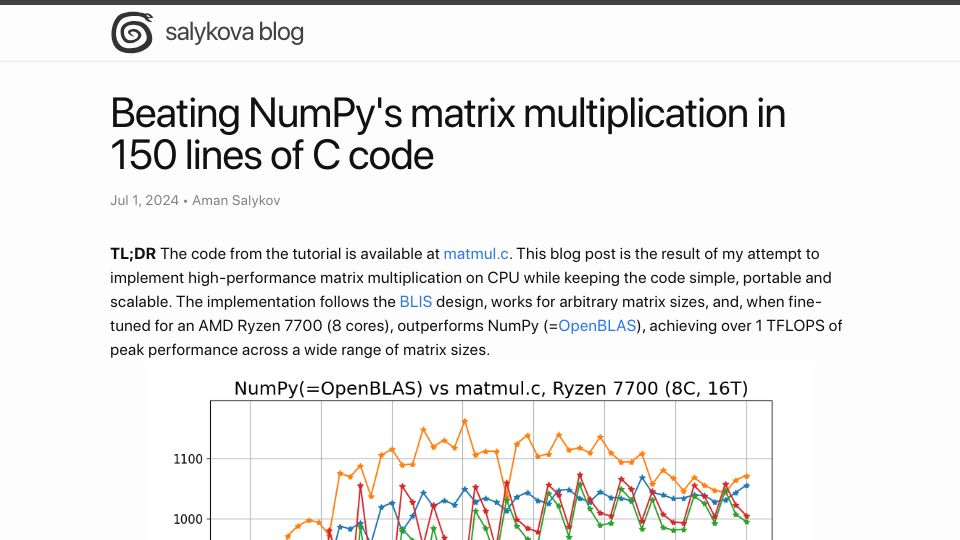
Blog tutorial implementing high-performance CPU matrix multiplication in about 150 lines of C, following the BLIS design and outperforming NumPy/OpenBLAS on a Ryzen 7700.
376 points by thunderbong | 148 comments
Blog post recounting how the author spent weeks hand-optimizing assembly for a Java platform, only to find the gains came from benchmarking on unrealistic random data.