First screen, captured .
Looks similar
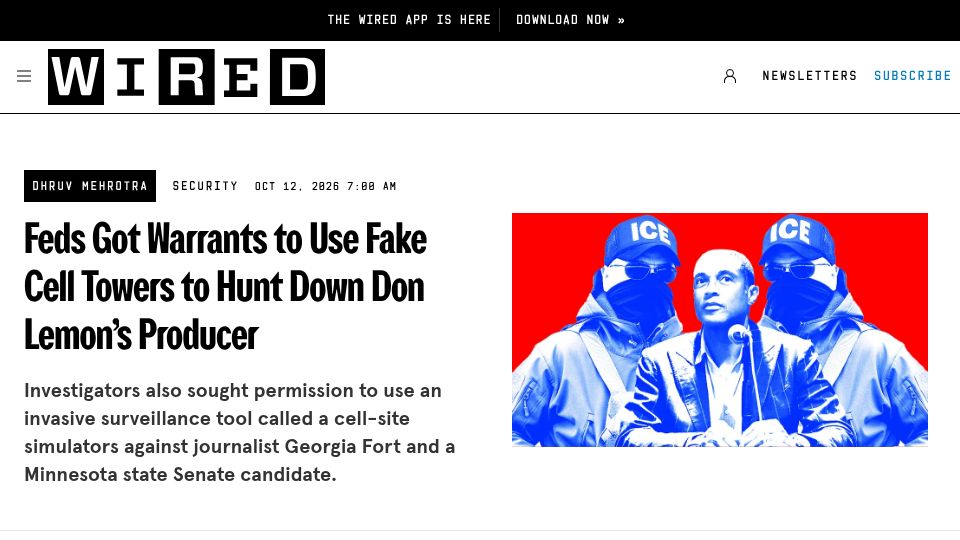
Feds got warrants to use fake cell towers to hunt down Don Lemon's producer(wired.com)
118 points by rndsignals | 75 comments
WIRED article reporting that federal investigators obtained warrants to use cell-site simulators to locate Don Lemon's producer, journalist Georgia Fort, and a Minnesota Senate candidate.
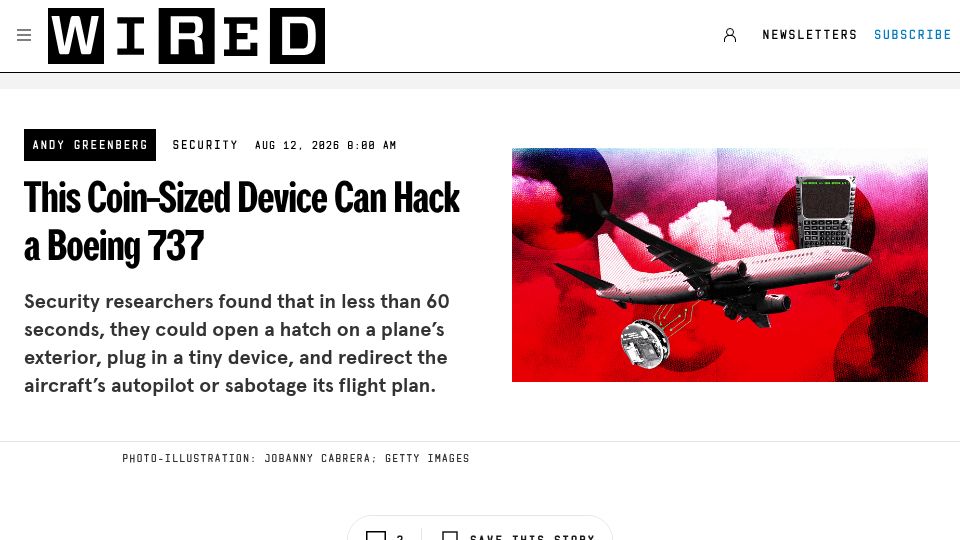
Coin-sized device can hack a Boeing 737(wired.com)
114 points by _tk_ | 83 comments
Related stories
Flock Exposed Its AI-Powered Cameras to the Internet. We Tracked Ourselves(404media.co)
737 points by chaps | 448 comments
404 Media article reporting that Flock's AI-powered surveillance cameras were exposed to the internet, letting reporters track themselves through the feeds.
Flock Wants the Most Detailed Map of Its Surveillance Cameras Taken Offline(theintercept.com)
134 points by bookofjoe | 59 comments
The Intercept article reporting that Flock Safety wants a detailed public map of its surveillance camera network taken offline.

Flock Hardcoded the Password for America's Surveillance Infrastructure 53 Times(nexanet.ai)
456 points by fuck_flock | 147 comments
Nexanet threat intel blog post reporting that Flock Safety hardcoded a password 53 times across its surveillance infrastructure software.
At least 25 Flock cameras have been destroyed in five states since April 2025(stateofsurveillance.org)
389 points by rolph | 284 comments
State of Surveillance news article reporting that Americans in several states are destroying Flock surveillance cameras amid backlash over the network's ties to ICE.
Hackers Had a Live Feed of Every ID Verification Company Scanned for over a Year(techdirt.com)
481 points by beardyw | 197 comments
Techdirt article reporting that hackers had a live feed of every ID scanned by an identity verification company for over a year, exposing 153 million license scans.

Flock Wants a Closely Surveilled World with No Exit(newyorker.com)
503 points by pseudolus | 386 comments
New Yorker essay examining Flock, the company with 130,000 surveillance cameras across U.S. streets, and its framing of privacy as a trade-off for safety.