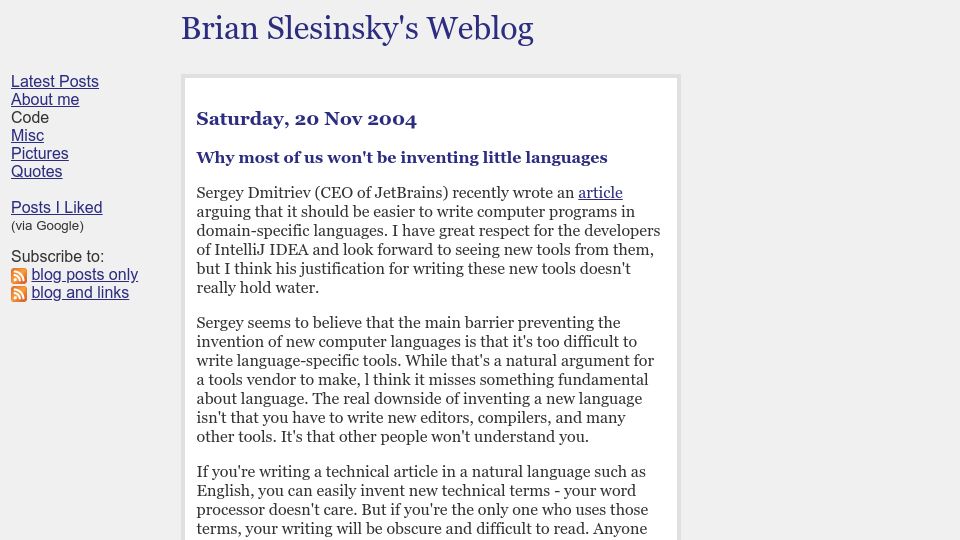

First screen, captured . Hover to scroll the page, or open the video.
Full page

Captured . Click for the whole screenshot.
Looks similar
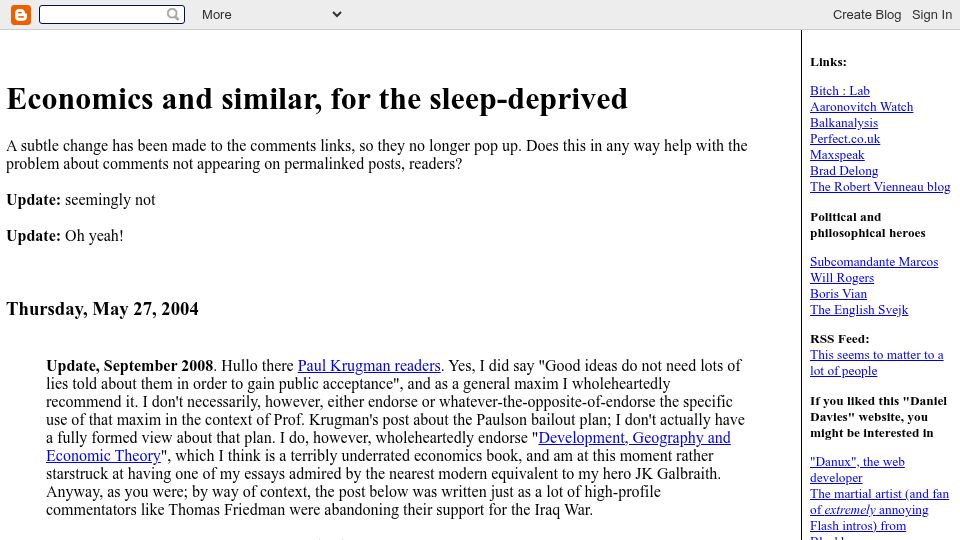
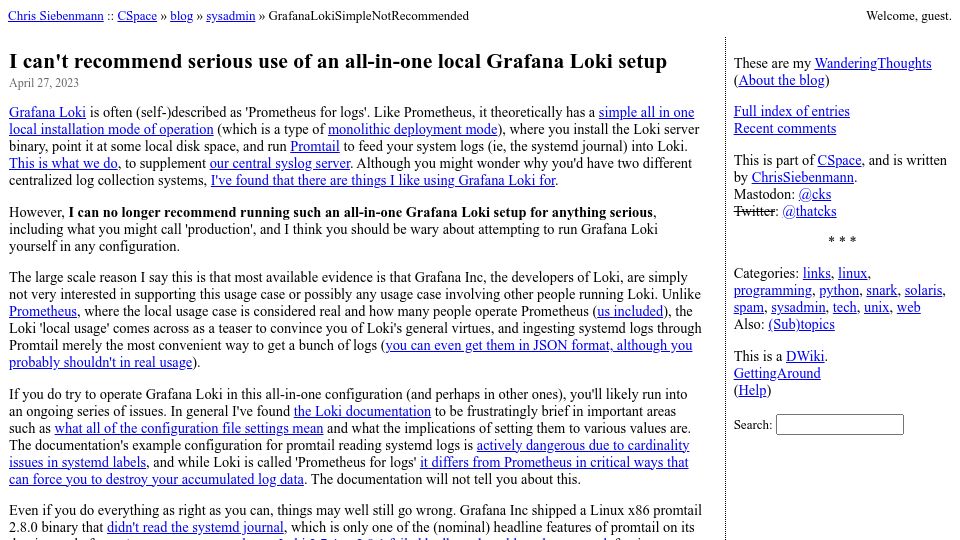
Good ideas do not need lots of lies in order to gain public acceptance (2008)(blog.danieldavies.com)
331 points by sedev | 173 comments
Daniel Davies' 2004 blog post, the 'D-Squared Digest One Minute MBA', arguing that good ideas do not need lies to gain acceptance, written amid the Iraq War debate, with a 2008 update.
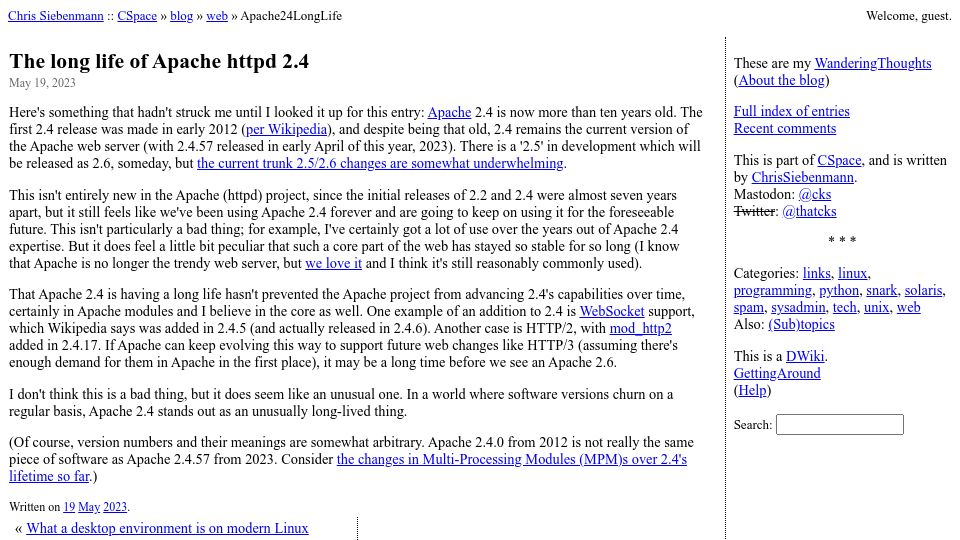
The long life of Apache httpd 2.4(utcc.utoronto.ca)
156 points by ingve | 121 comments
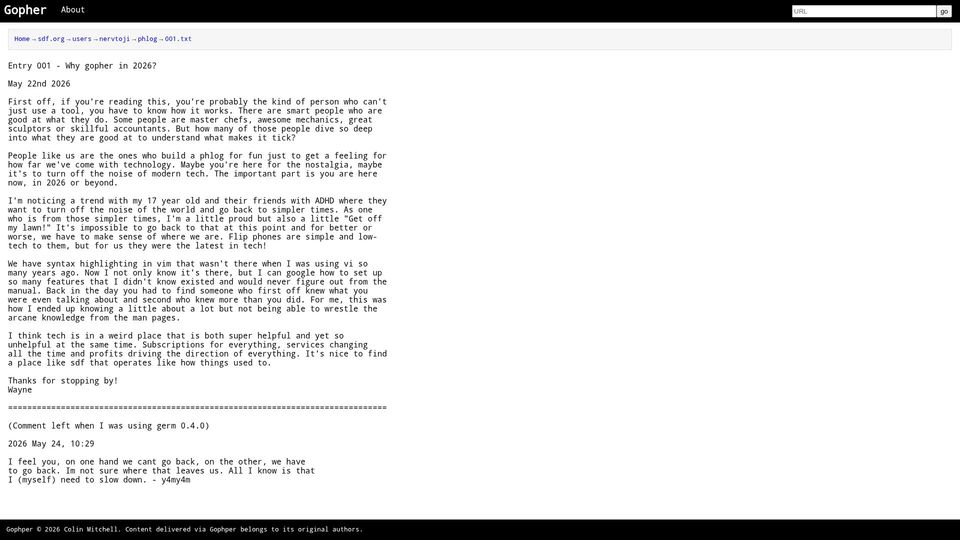
Why Gopher in 2026?(gopher.muffinlabs.com)
108 points by andsoitis | 59 comments
A personal phlog entry on SDF's Gopher space, viewed through a web proxy, reflecting on why someone would use Gopher in 2026 and on simpler, less commercial tech.
Related stories
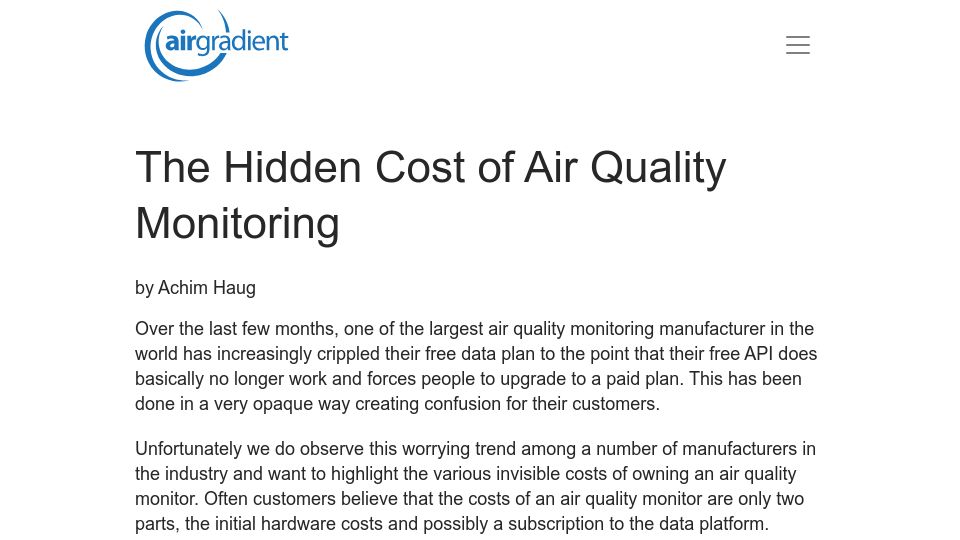
The hidden cost of air quality monitoring(airgradient.com)
539 points by ahaucnx | 258 comments
AirGradient blog post by Achim Haug on the hidden costs of owning air quality monitors, such as manufacturers crippling free data APIs to push paid plans.

Turn Dependabot off(words.filippo.io)
606 points by todsacerdoti | 178 comments
Filippo Valsorda's blog post arguing that Dependabot is a noise machine and should be turned off, especially for security alerts in the Go ecosystem.

Breaking Free from DRM: Hacking My Air Purifier(unethical.info)
321 points by unethicalinfo | 125 comments
Blog post on the Unethical Info blog describing how the author hacked an air purifier to bypass its DRM-protected filters.
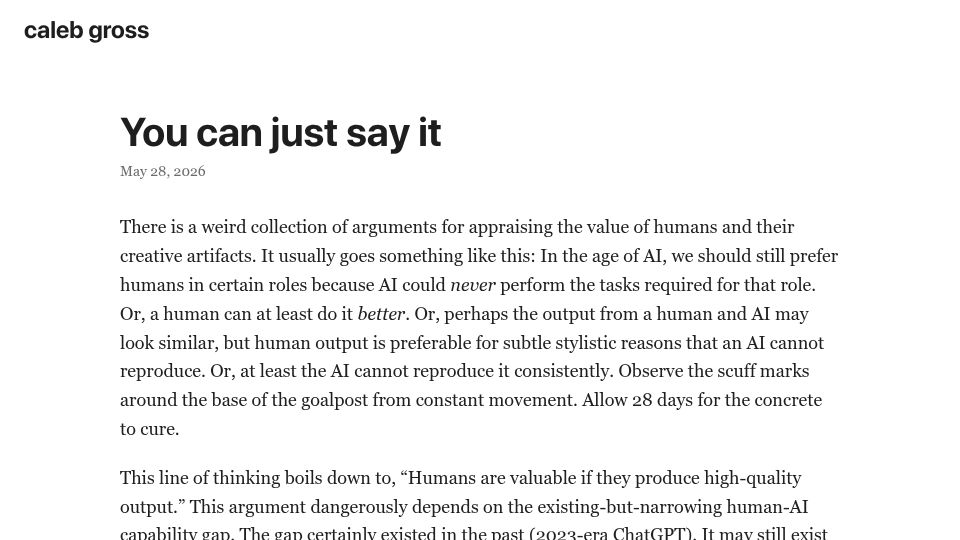
You can just say it(noperator.dev)
331 points by antirez | 172 comments
Personal blog essay by Caleb Gross arguing against valuing humans only for output quality that AI may eventually match, and for stating human value directly.
Artificial intelligence is losing hype(economist.com)
453 points by bx376 | 663 comments
An Economist Free exchange column arguing that artificial intelligence is losing hype and asking whether that signals the technology will eventually succeed.
Neural networks are clean(already-clean.goodfire.com)
768 points by themgt | 300 comments
An informal research essay by Nick Cammarata at Goodfire arguing polysemanticity stems from fixable issues, not superposition, making neurons interpretable at scale.