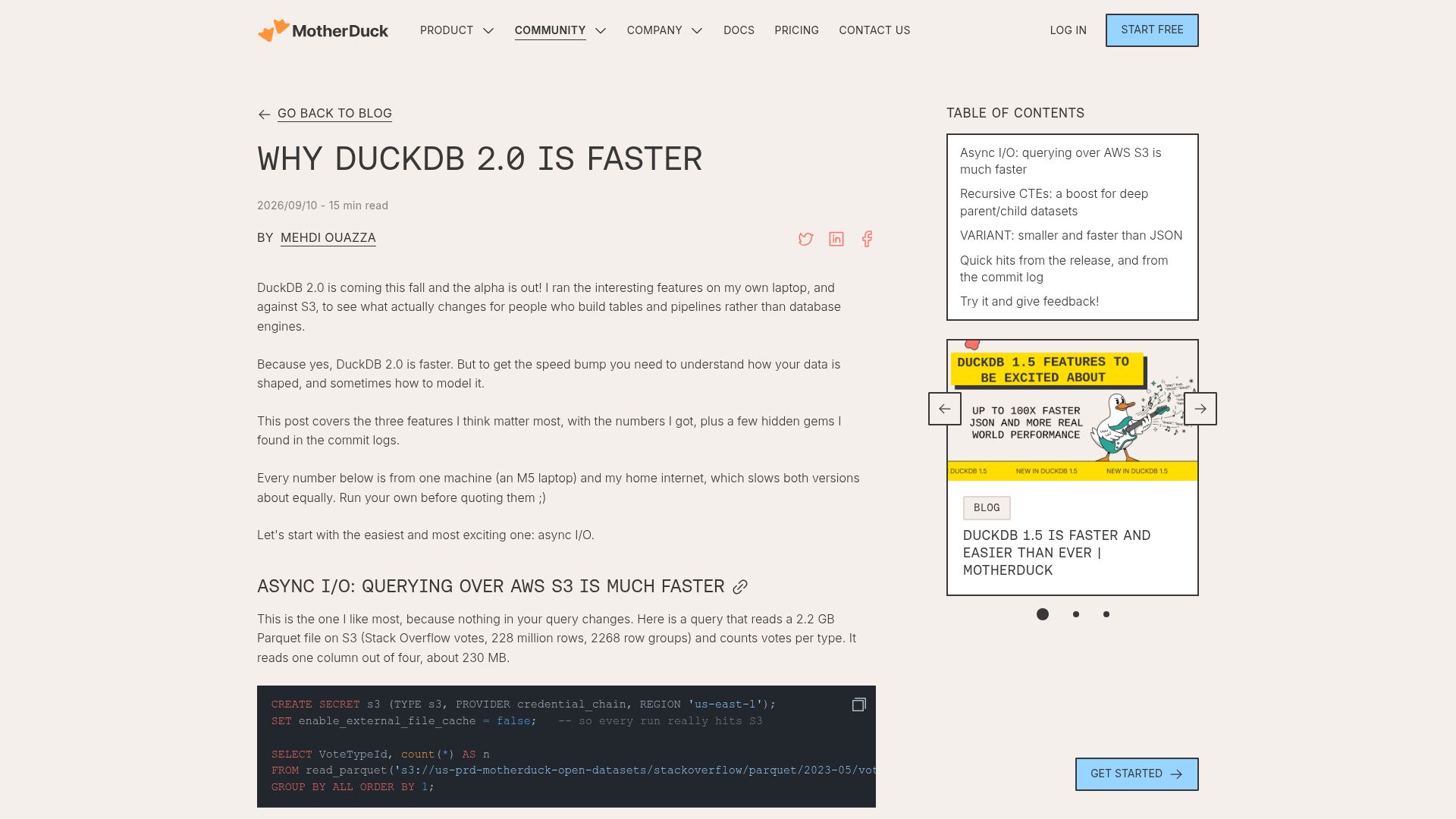
First screen, captured .
Looks similar
DuckDB V2 PEG-based SQL parser(duckdb.org)
50 points by karma_daemon | 5 comments
An open source DuckDB text to SQL LLM(motherduck.com)
107 points by vgt | 28 comments
A Preview of DuckDB v2.0(duckdb.org)
684 points by ibotty | 120 comments
DuckDB blog post previewing v2.0 features including server mode, triggers, VARIANT type, async I/O, a new SQL parser and storage format.
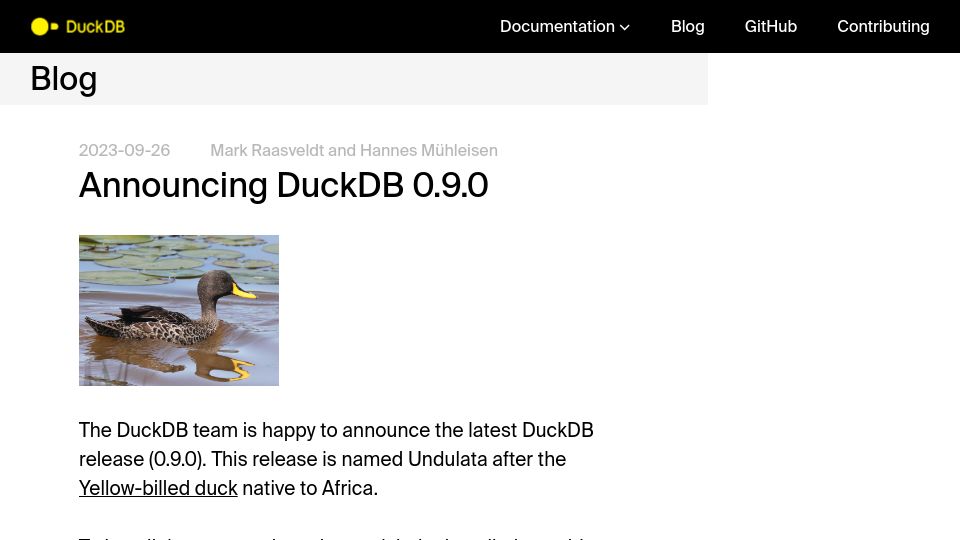
DuckDB 0.9.0(duckdb.org)
136 points by nnx | 30 comments
DuckDB Doesn't Need Data to Be a Database(nikolasgoebel.com)
353 points by tosh | 115 comments
A blog post by Nikolas Göbel discussing how DuckDB can act as a database without storing data itself, querying external data sources directly.
Related stories
DuckDB Doesn't Need Data to Be a Database(nikolasgoebel.com)
353 points by tosh | 115 comments
A blog post by Nikolas Göbel discussing how DuckDB can act as a database without storing data itself, querying external data sources directly.
The DuckDB Local UI(duckdb.org)
868 points by xnx | 181 comments
DuckDB blog post announcing a local web-based UI for DuckDB, built with MotherDuck and shipped as part of the ui extension.
A Preview of DuckDB v2.0(duckdb.org)
684 points by ibotty | 120 comments
DuckDB blog post previewing v2.0 features including server mode, triggers, VARIANT type, async I/O, a new SQL parser and storage format.
Quack: The DuckDB Client-Server Protocol(duckdb.org)
347 points by aduffy | 74 comments
DuckDB blog post announcing Quack, a remote protocol letting DuckDB instances communicate in a client-server setup with multiple concurrent writers over HTTP.
DuckDB is probably the most important geospatial software of the last decade(dbreunig.com)
444 points by dbreunig | 139 comments
Blog post by Drew Breunig arguing that DuckDB's spatial extension has made geospatial data accessible to far more people than specialized GIS tools.
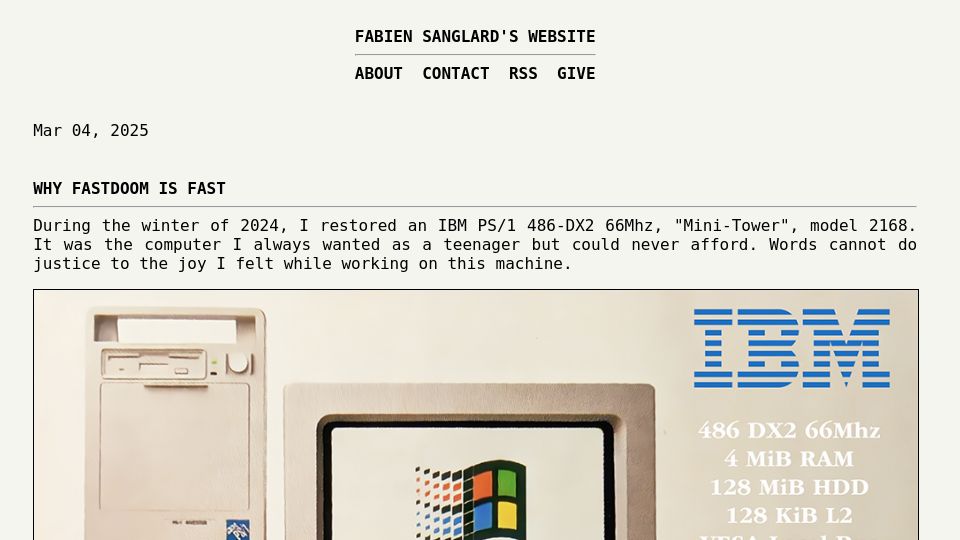
Why fastDOOM is fast(fabiensanglard.net)
638 points by wicket | 201 comments
Fabien Sanglard's blog post explaining the optimizations that make FastDOOM, a DOS port of Doom, run faster on 486-era PCs like the IBM PS/1.