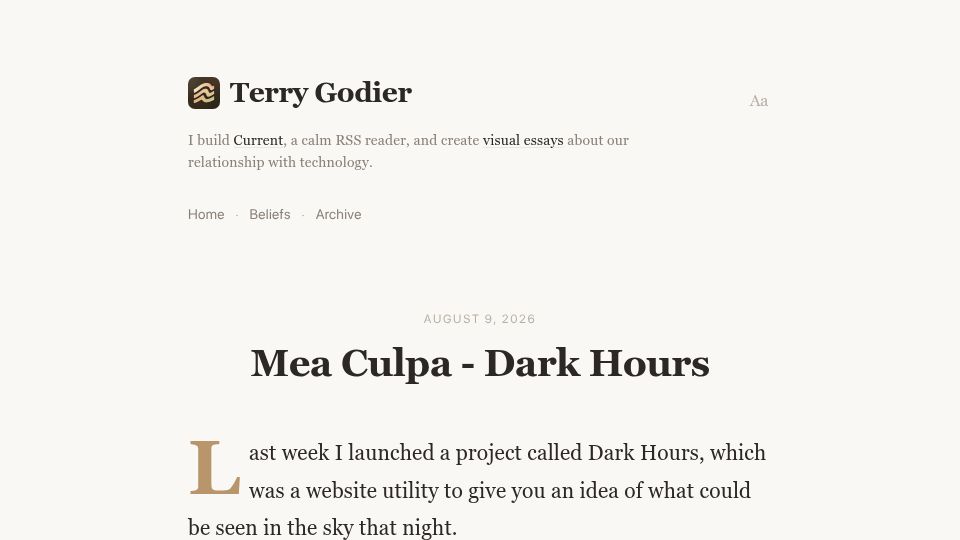
Mea Culpa – Dark Hours(blog.terrygodier.com)
568 points by satvikpendem | 255 comments
Terry Godier's blog post apologizing for problems with Dark Hours, a website he launched to show what can be seen in the night sky.
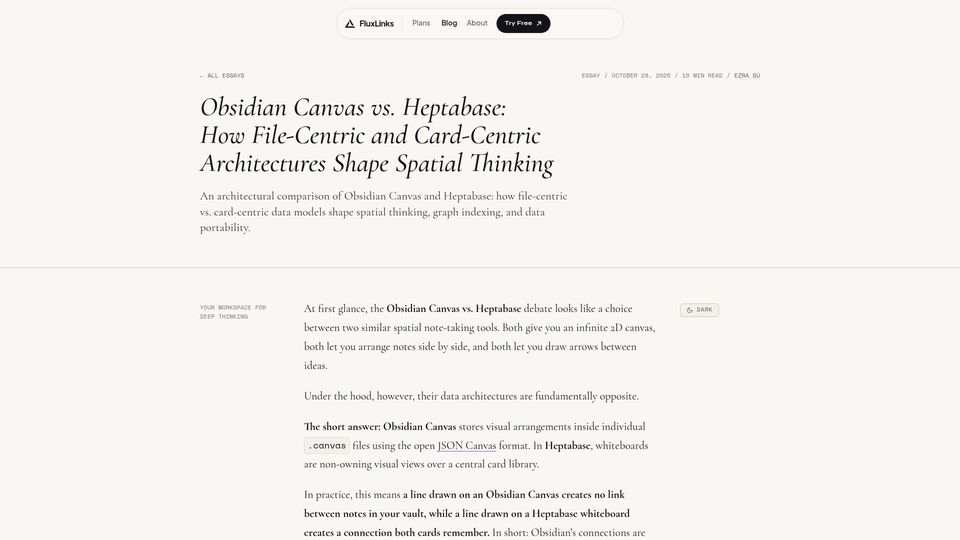
First screen, captured . Hover to scroll the page, or open the video.

Captured . Click for the whole screenshot.
568 points by satvikpendem | 255 comments
Terry Godier's blog post apologizing for problems with Dark Hours, a website he launched to show what can be seen in the night sky.
80 points by surprisetalk | 14 comments
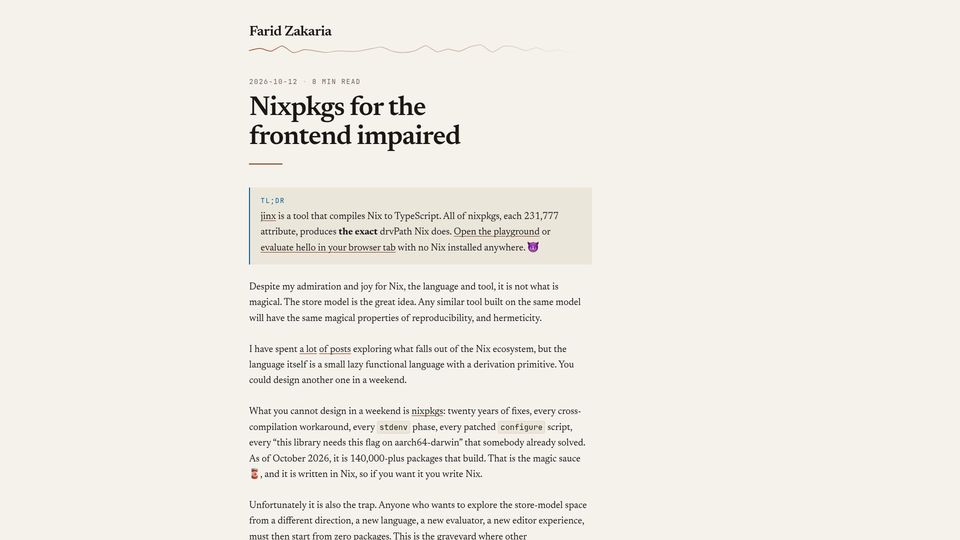
Blog post introducing jinx, a tool that compiles Nix to TypeScript and evaluates all of nixpkgs with identical drvPaths, runnable in a browser.
666 points by csmantle | 140 comments
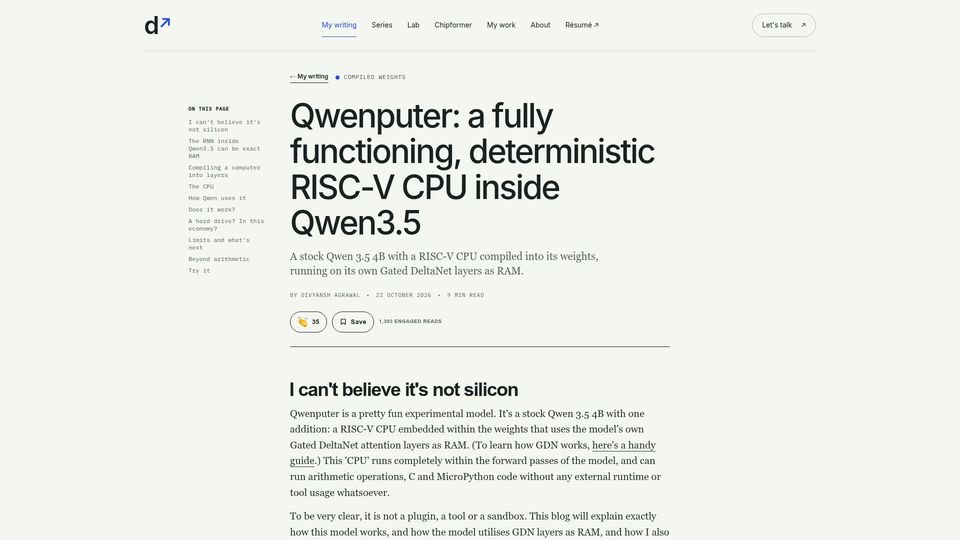
Blog post describing Qwenputer, a Qwen3.5 4B model with a RISC-V CPU compiled into its weights that uses Gated DeltaNet layers as RAM to run code internally.
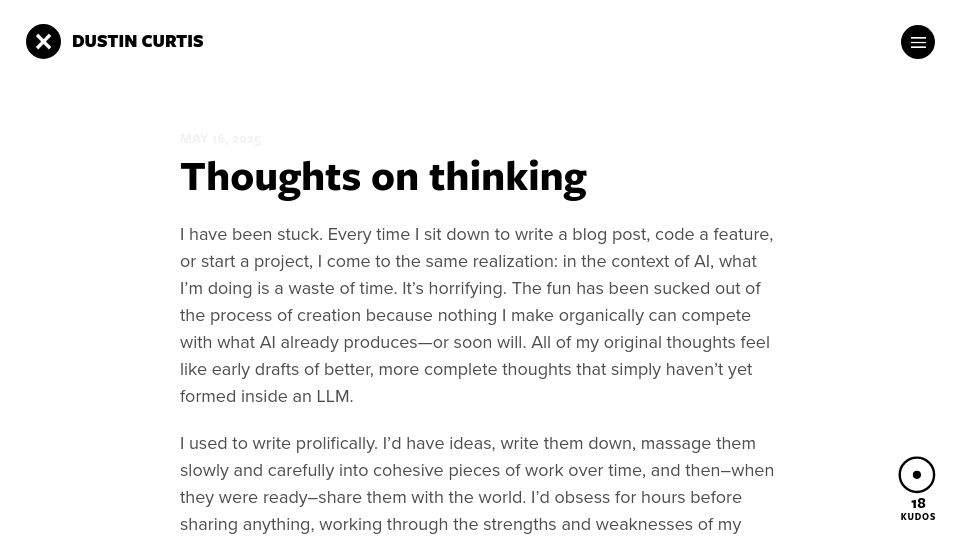
588 points by bradgessler | 367 comments
Dustin Curtis's blog essay reflecting on how AI and LLMs have made his own writing, coding, and creative thinking feel pointless.
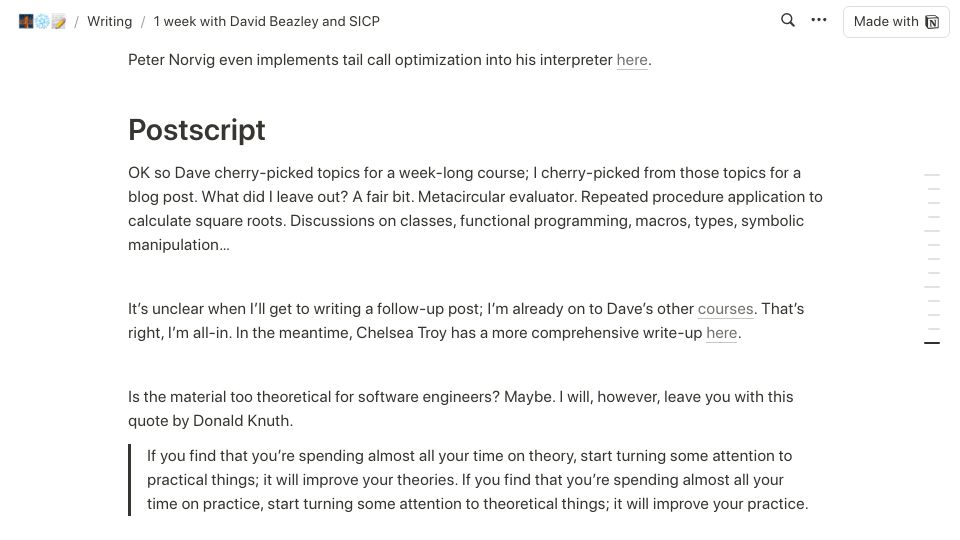
370 points by kurinikku | 211 comments
A Notion-hosted blog post recounting a week-long SICP course taught by David Beazley, covering functions, interpreters, and tail call optimization.
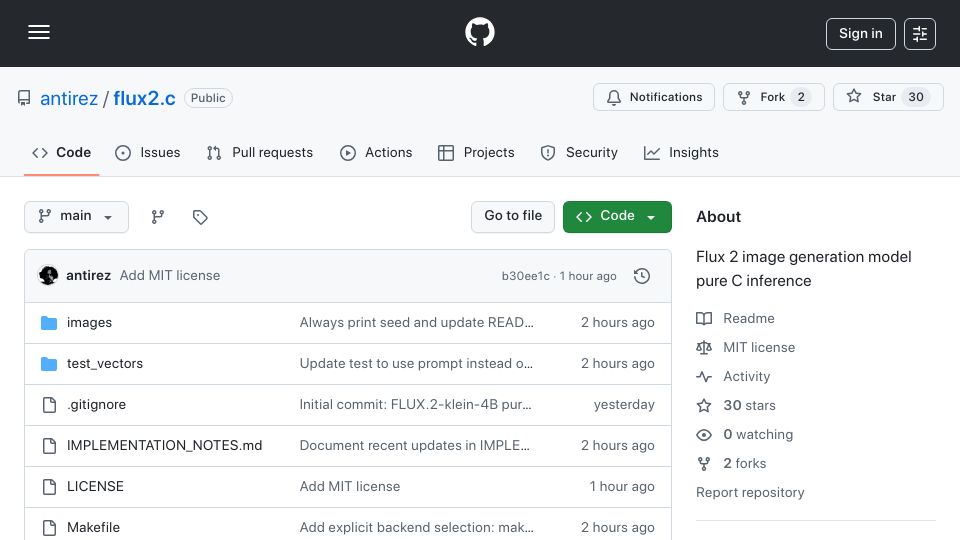
421 points by antirez | 135 comments
GitHub repository by antirez for flux2.c, a pure C inference implementation of the FLUX.2 Klein image generation model.
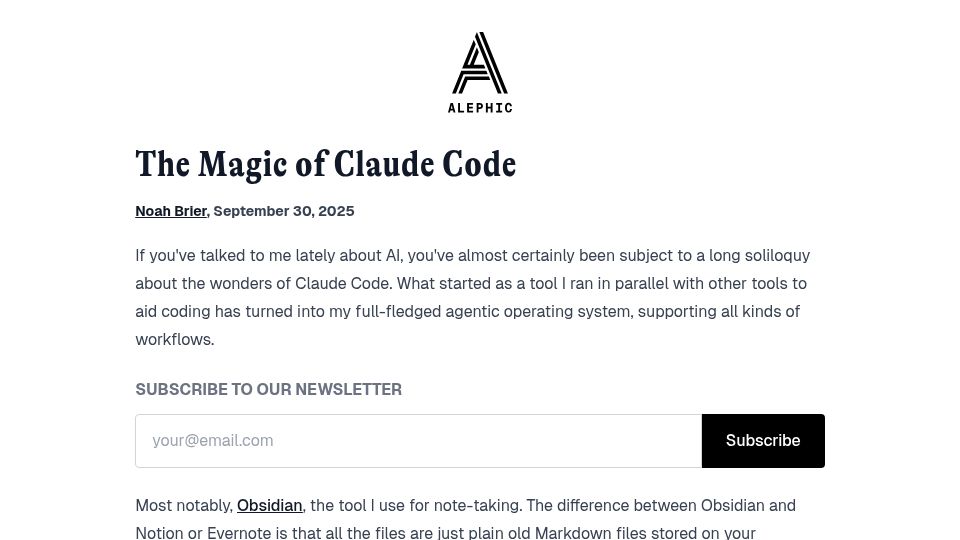
377 points by noahbrier | 197 comments
Blog post by Noah Brier on Alephic describing how Claude Code, combined with Obsidian's plain Markdown files and filesystem access, became his agentic operating system.
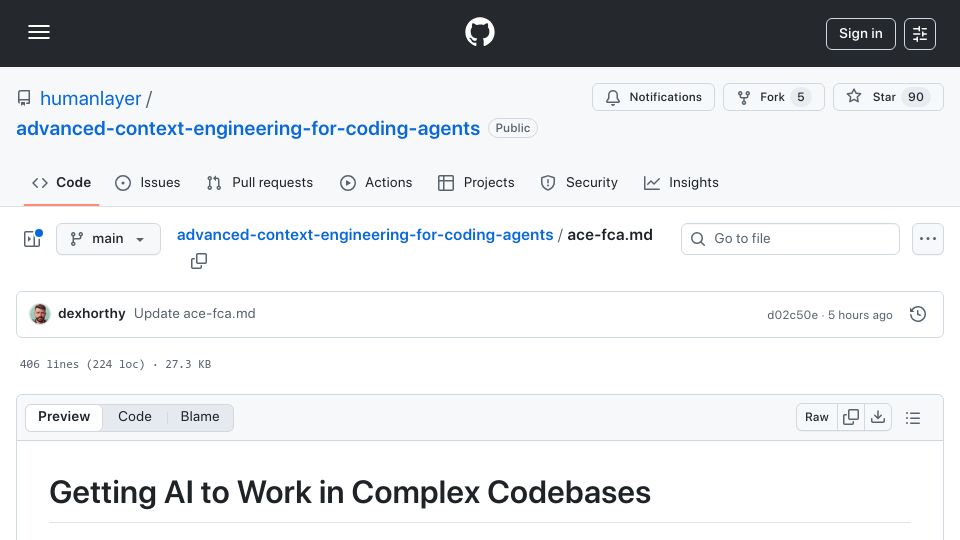
442 points by dhorthy | 368 comments
A GitHub markdown document from HumanLayer describing advanced context engineering techniques for getting AI coding agents to work in complex codebases.
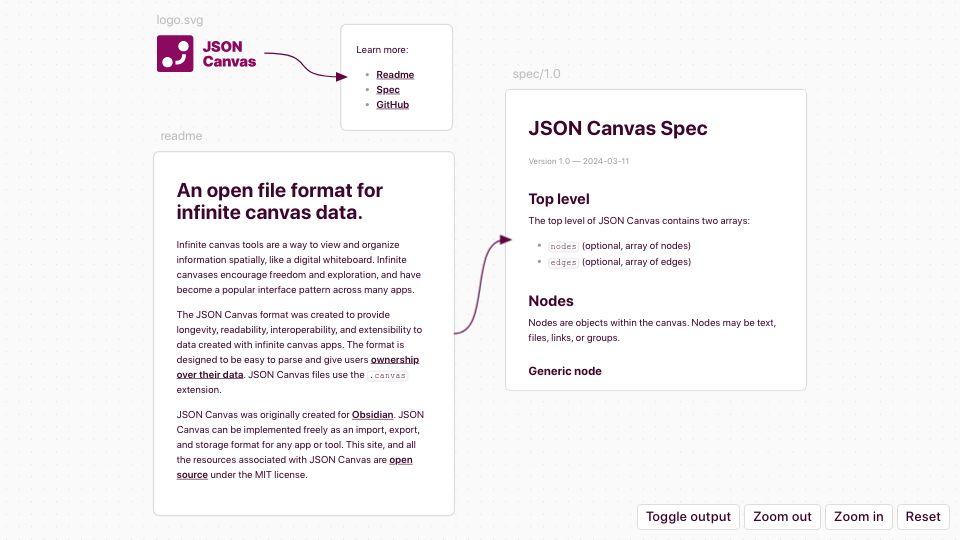
750 points by nickmain | 148 comments
Homepage for JSON Canvas, an open MIT-licensed file format for infinite canvas data originally created for Obsidian, with readme and version 1.0 spec.
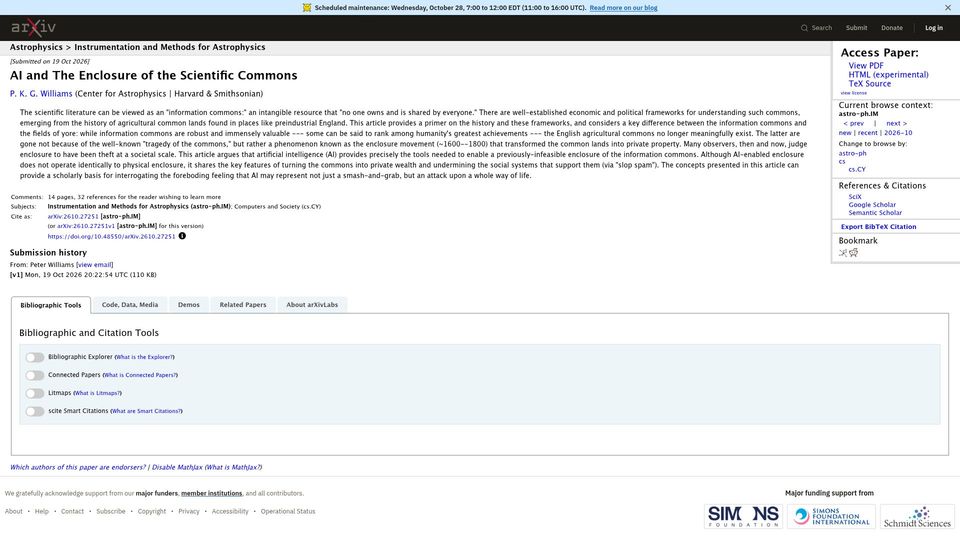
131 points by jrepinc | 77 comments
arXiv paper arguing that AI enables an enclosure of the scientific literature as an information commons, analogous to the historical English enclosure of common lands.
44 points by david2ndaccount | 13 comments
David Priver's blog post describing fun extensions he added to the C preprocessor in his own C2Y compiler/interpreter, such as __print() and __where() debugging macros.