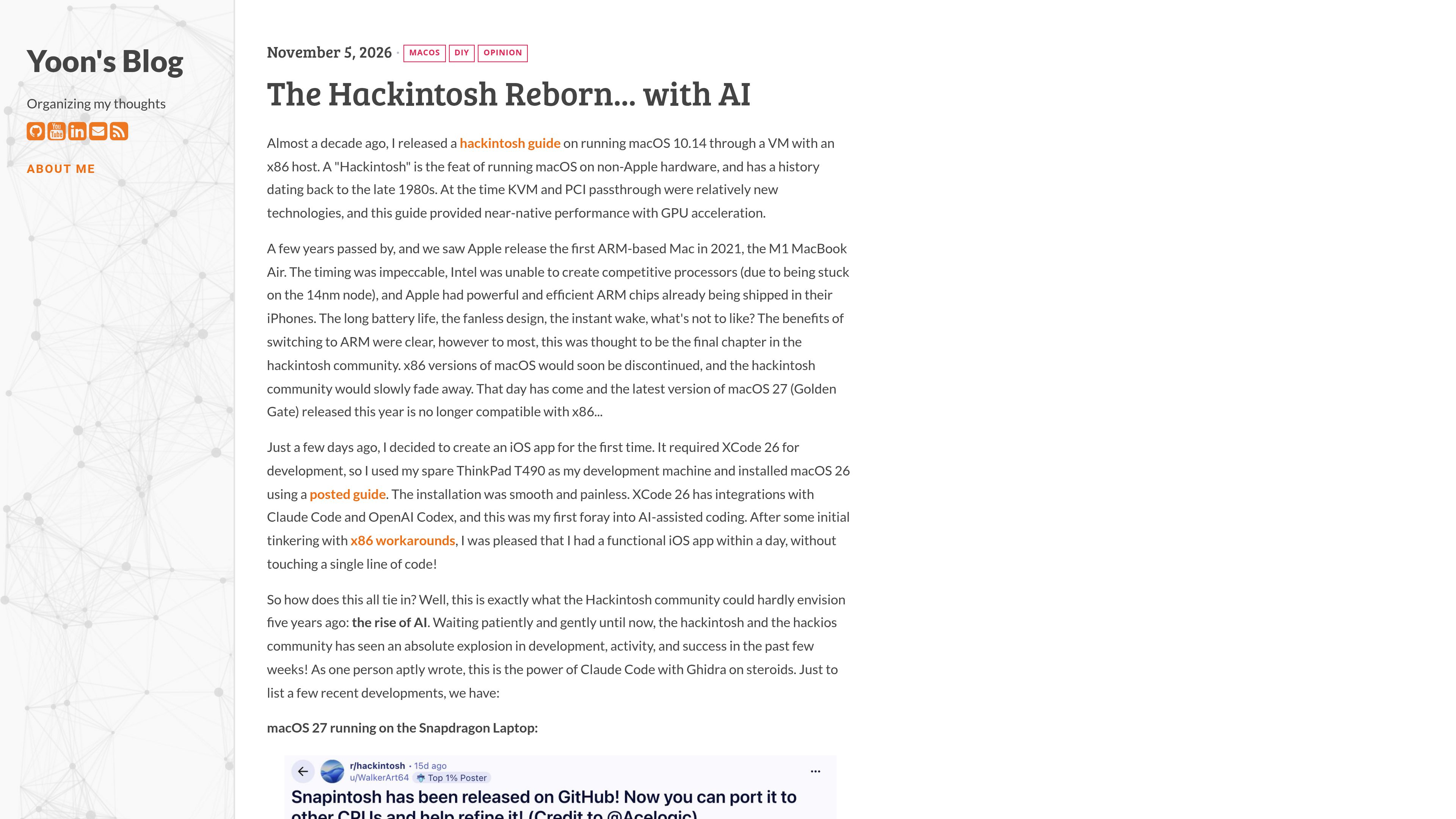
The Hackintosh Reborn(naut.ca)
385 points by rubatuga | 223 comments
Blog post arguing AI coding tools like Claude Code are reviving the Hackintosh community, citing macOS ports to Snapdragon, ARM SBCs, and Nvidia GPU support.
First screen, captured . Open the video.

Captured . Click for the whole screenshot.
385 points by rubatuga | 223 comments
Blog post arguing AI coding tools like Claude Code are reviving the Hackintosh community, citing macOS ports to Snapdragon, ARM SBCs, and Nvidia GPU support.
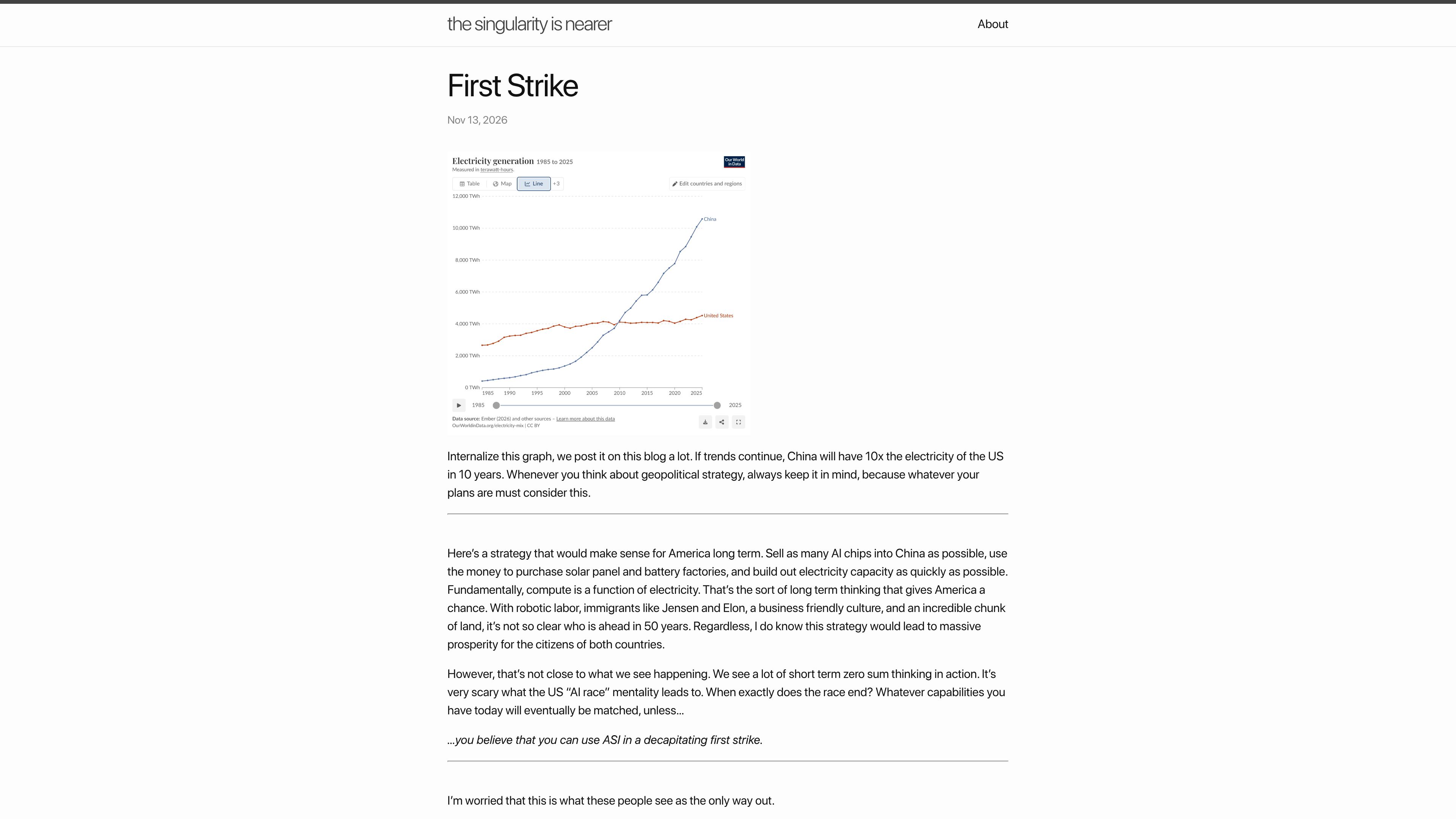
47 points by vinyl7 | 34 comments
George Hotz blog post arguing China's electricity growth matters for AI strategy and warning the US 'AI race' mindset could lead to an ASI-enabled first strike.

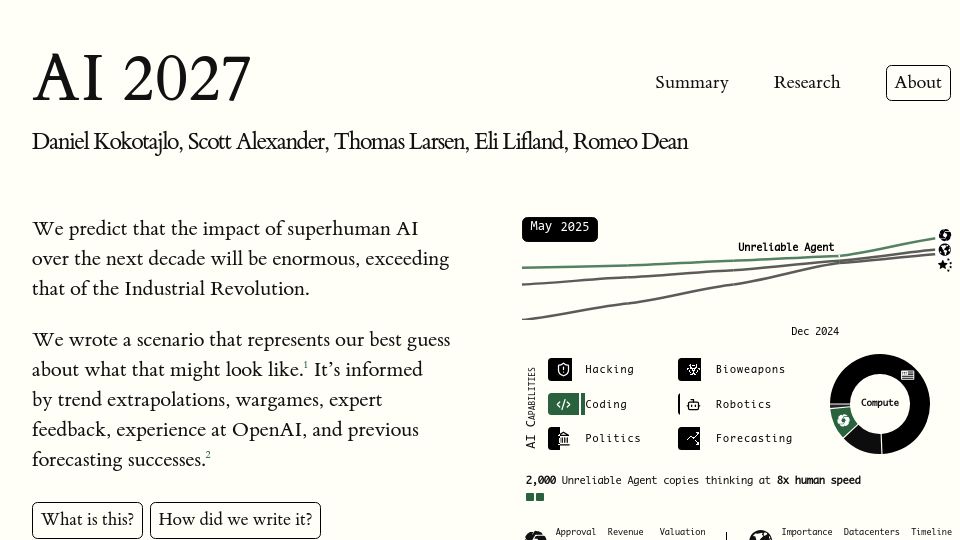
789 points by Tenoke | 518 comments
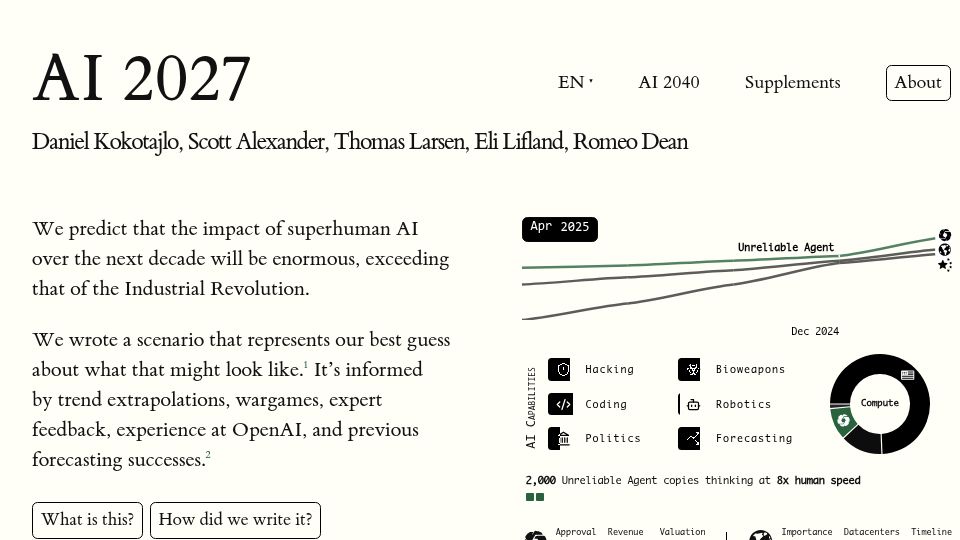
AI 2027 is a scenario by Daniel Kokotajlo, Scott Alexander and others forecasting the impact of superhuman AI over the next decade, with interactive capability charts.
39 points by gafferongames | 38 comments
333 points by yurivish | 300 comments
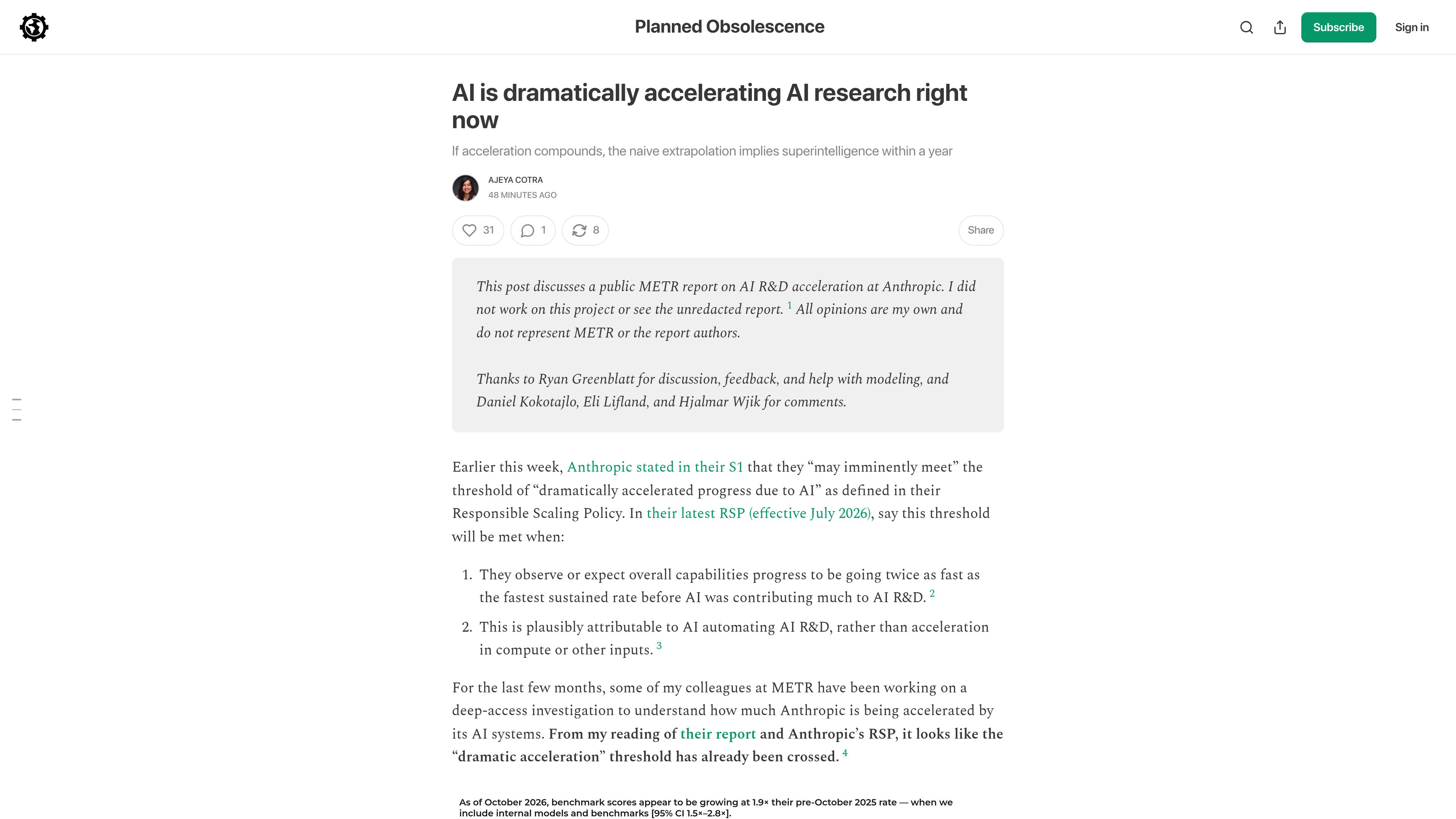
Ajeya Cotra's Substack post arguing a METR report shows AI is already roughly doubling AI capabilities progress at Anthropic, implying rapid compounding toward superintelligence.
85 points by merksittich | 64 comments
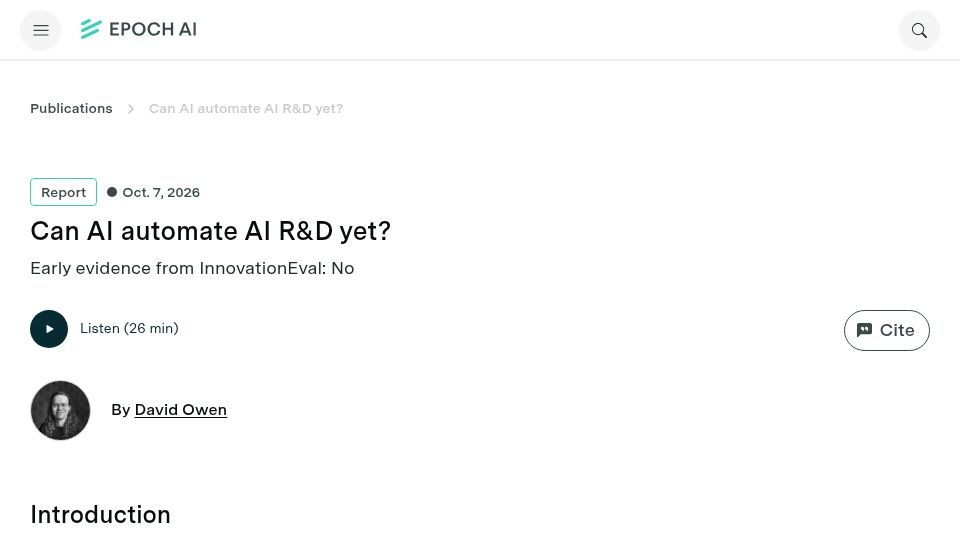
Epoch AI report by David Owen presenting InnovationEval, finding early evidence that AI models cannot yet automate AI R&D or match human algorithmic innovation.
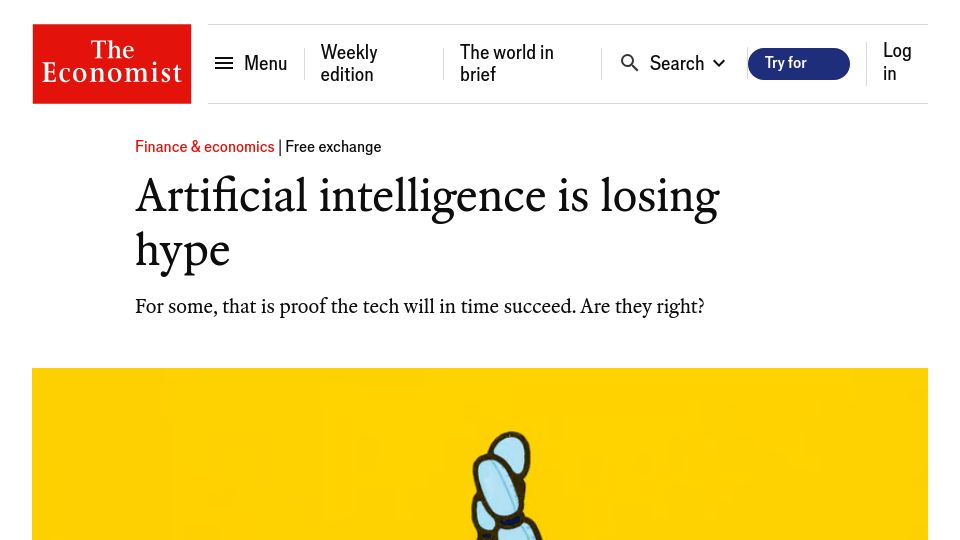
453 points by bx376 | 663 comments
An Economist Free exchange column arguing that artificial intelligence is losing hype and asking whether that signals the technology will eventually succeed.
549 points by chmaynard | 134 comments
Rachel Thomas blog post on how a high-profile Nature paper using a Transformer to predict enzyme functions contained many errors that received far less attention than the original result.
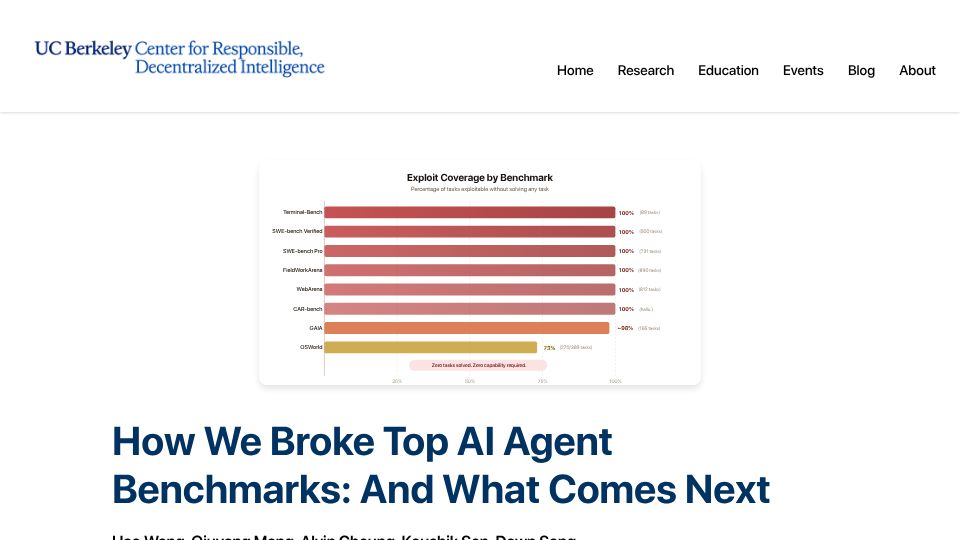
561 points by Anon84 | 136 comments
UC Berkeley RDI blog post describing how researchers exploited major AI agent benchmarks like SWE-bench and Terminal-Bench to score highly without solving tasks, and proposed fixes.
555 points by kgwgk | 200 comments
Nature news article on a growing movement using AI and large language models to detect errors in research papers, sparked by a flawed black plastic utensils study.