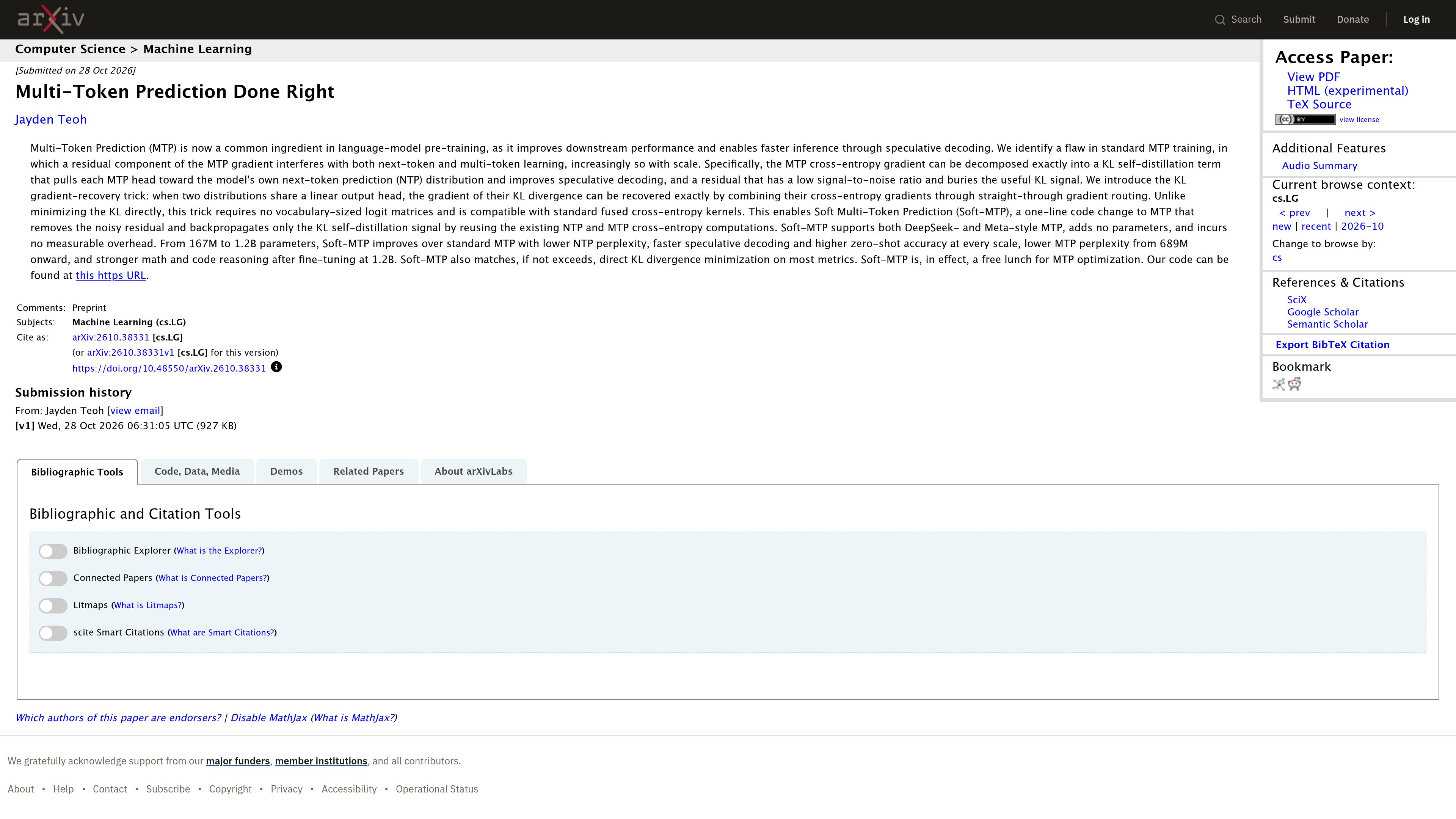
Multi-Token Prediction Done Right(arxiv.org)
3 points by matt_d | 2 comments
arXiv preprint introducing Soft-MTP, a one-line change to multi-token prediction training that keeps only a KL self-distillation gradient signal.
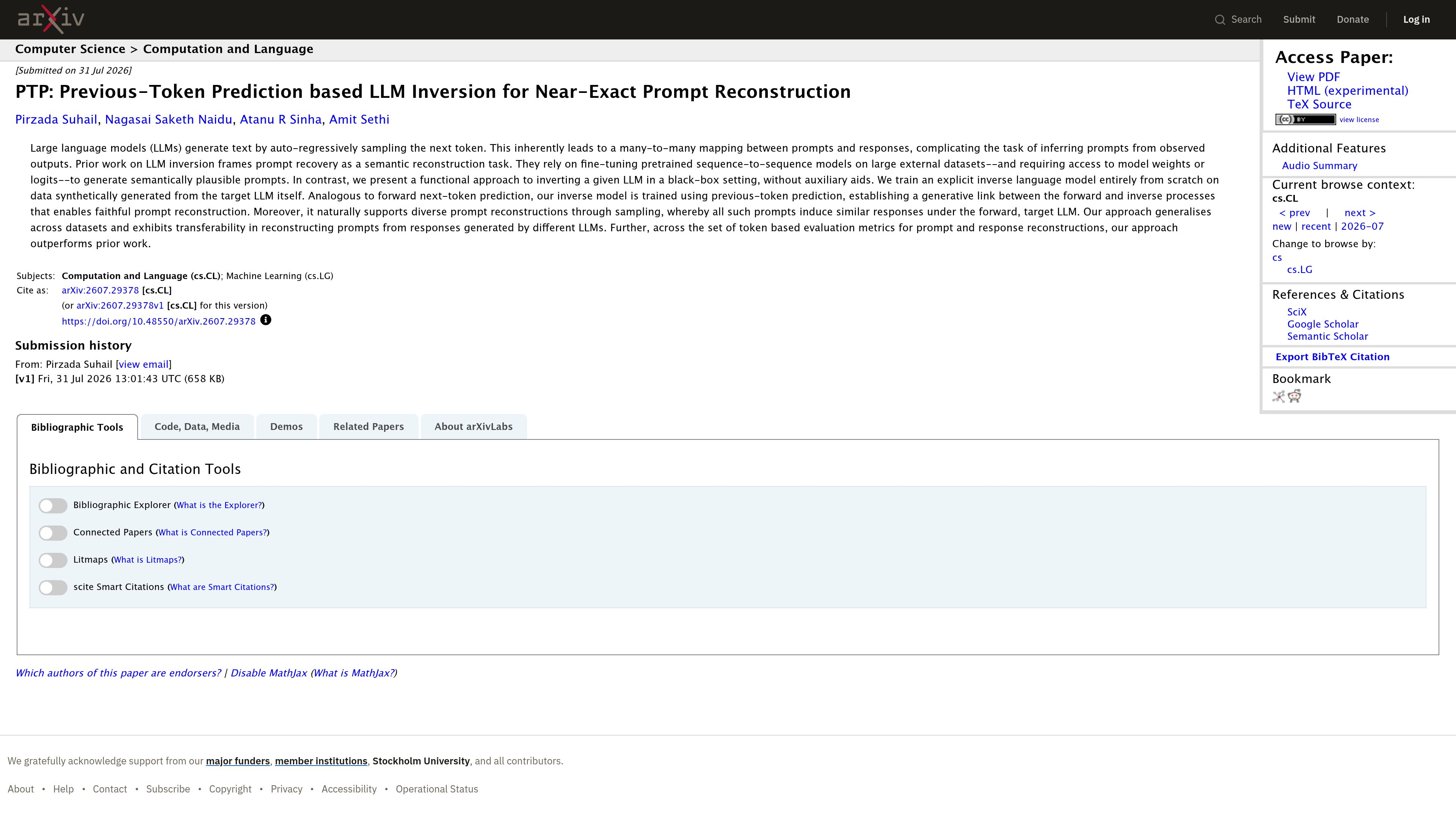
First screen, captured . Open the video.
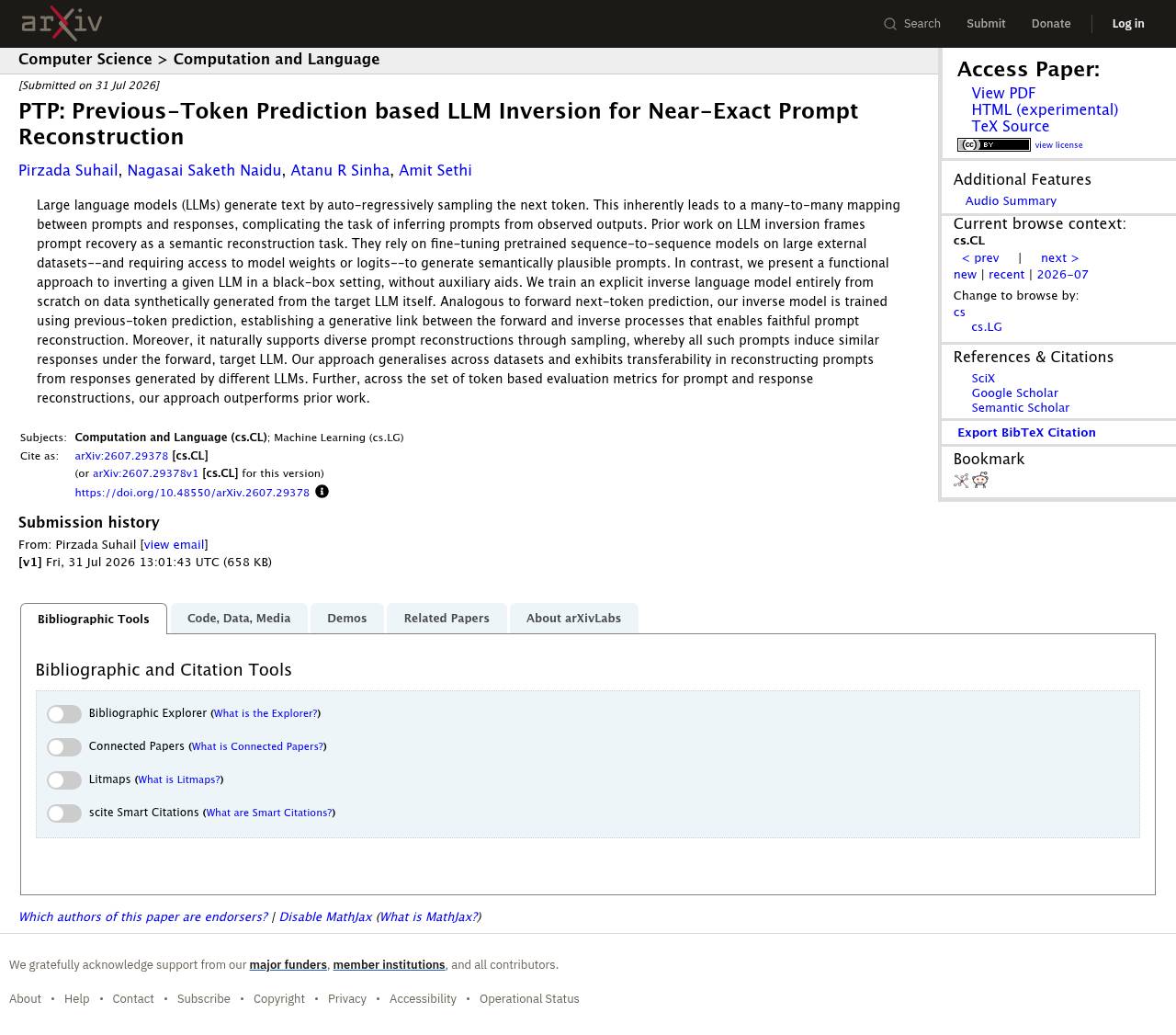
Captured . Click for the whole screenshot.
3 points by matt_d | 2 comments
arXiv preprint introducing Soft-MTP, a one-line change to multi-token prediction training that keeps only a KL self-distillation gradient signal.
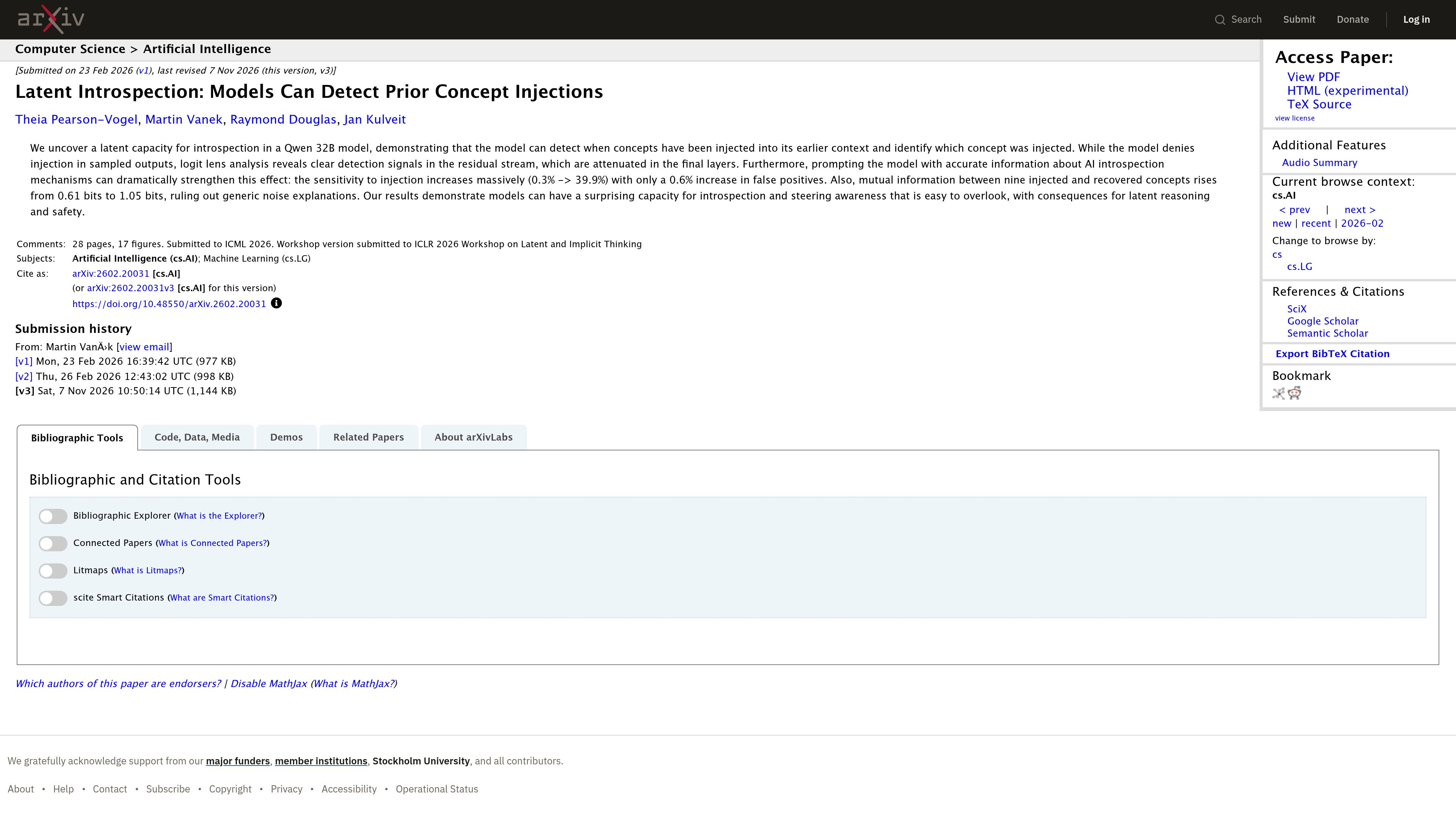
65 points by joecobb | 5 comments
arXiv paper showing a Qwen 32B model can internally detect and identify concepts injected into its earlier context, revealed via logit lens analysis.
59 points by kakadu | 9 comments
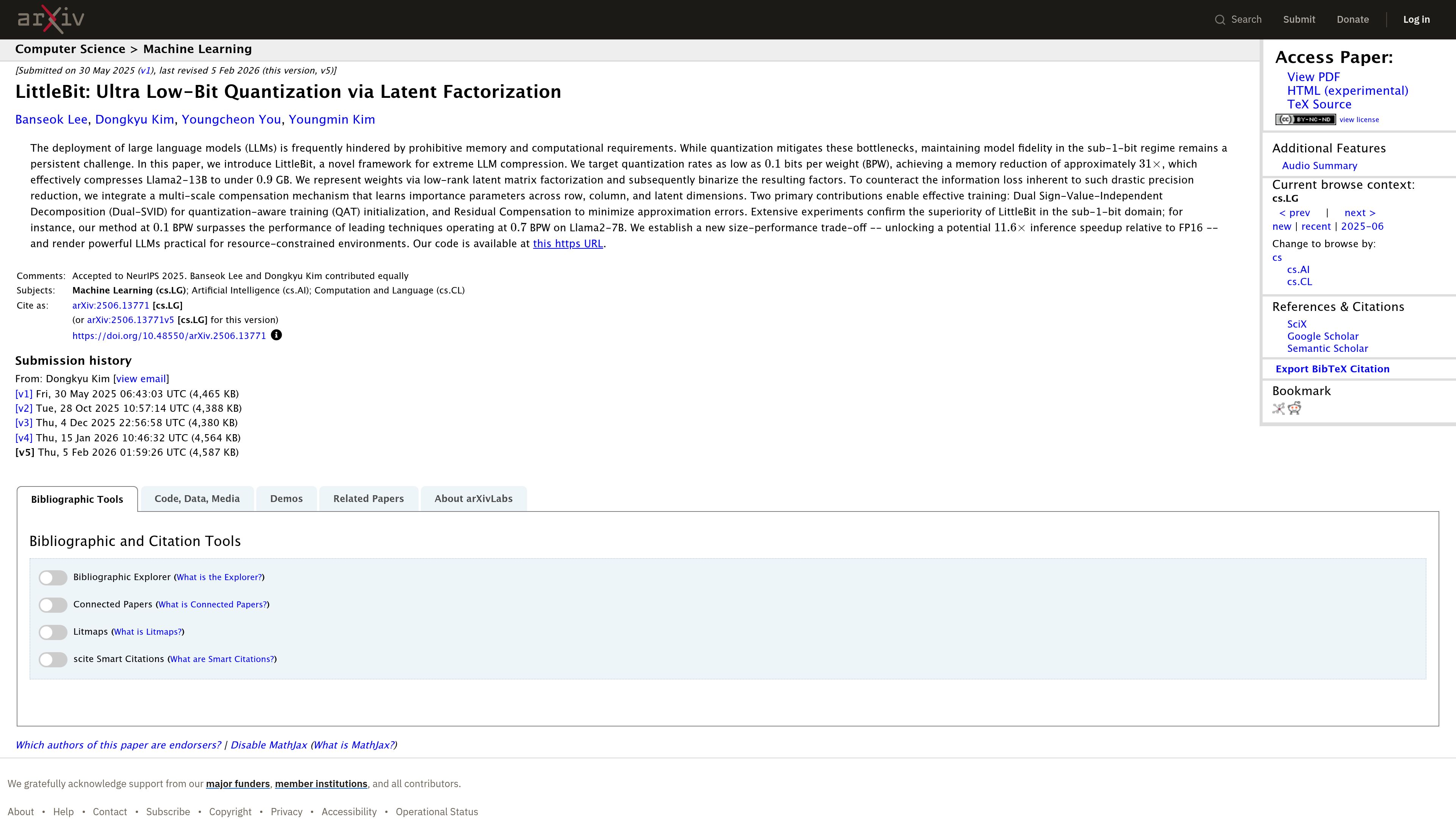
arXiv abstract page for LittleBit, a NeurIPS 2025 paper on sub-1-bit LLM quantization using binarized low-rank latent factorization, reaching 0.1 bits per weight.
101 points by handfuloflight | 10 comments
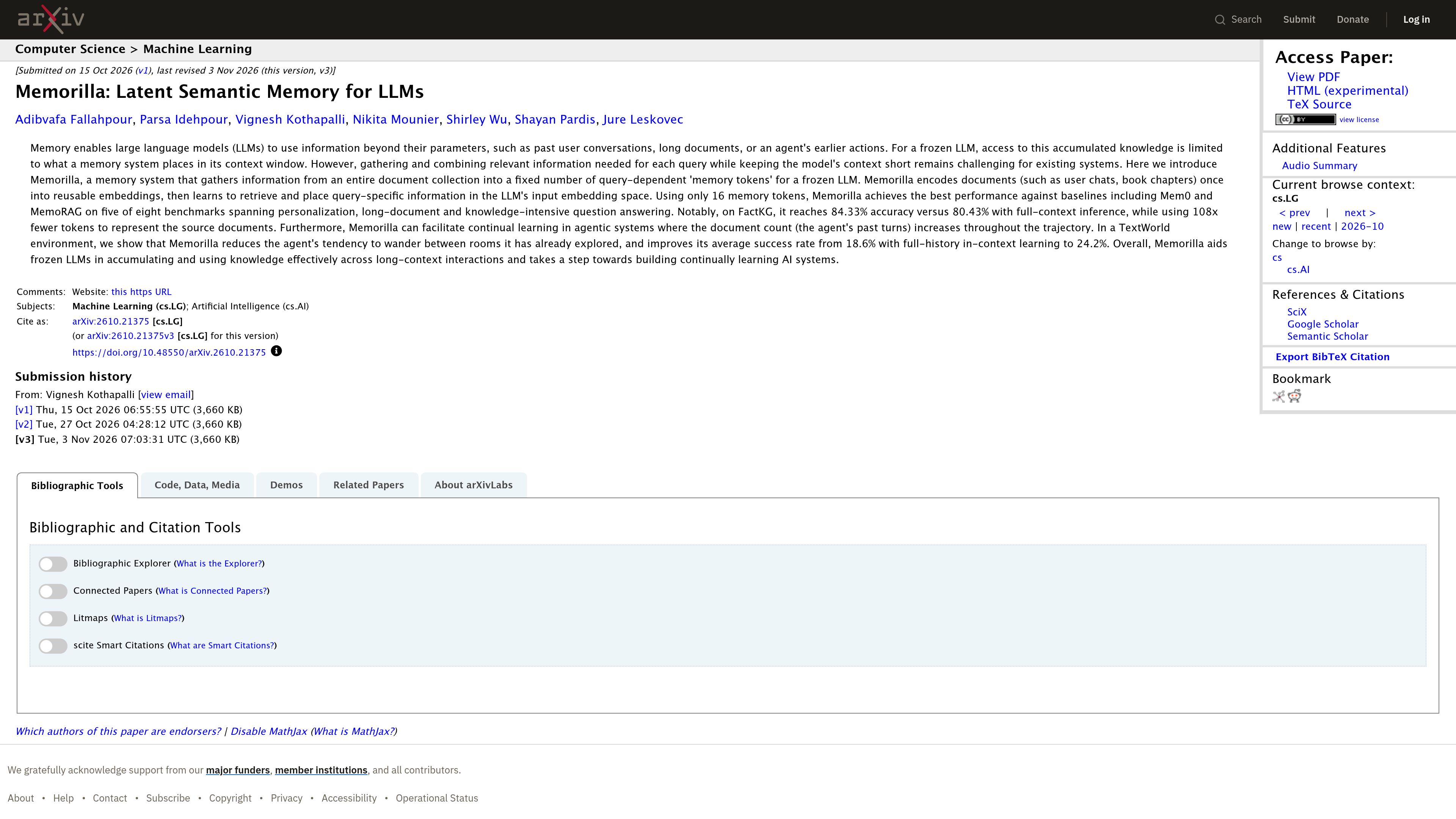
arXiv paper introducing Memorilla, a system that compresses document collections into query-dependent memory tokens in the input embedding space of frozen LLMs.
106 points by teleforce | 28 comments
arXiv listing for "A primer on Fourier Series," an open textbook for undergraduate and graduate courses with exercises and full solutions.

545 points by davidbarker | 369 comments
OpenAI post announcing that GPT-5.2 derived a new result in theoretical physics; the captured page shows only a loading logo.
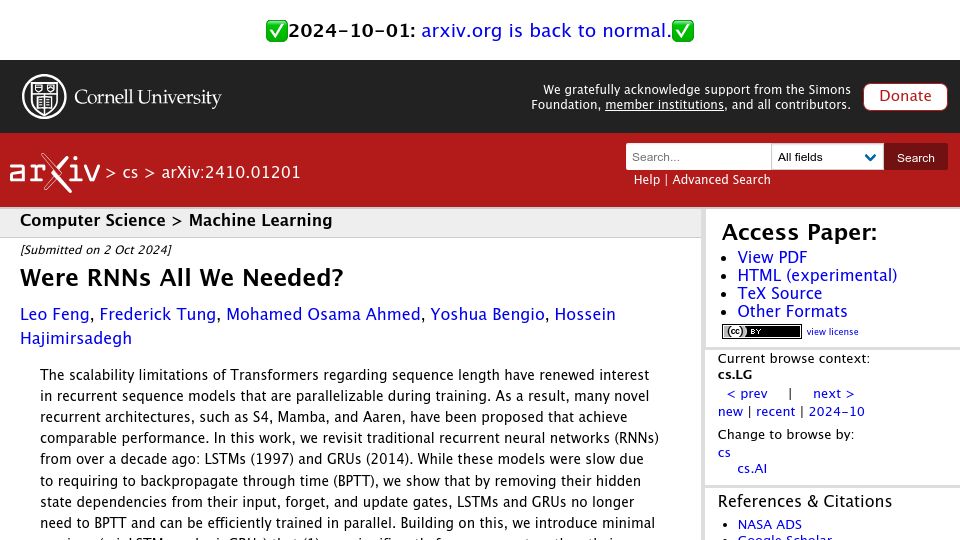
466 points by beefman | 245 comments
arXiv paper proposing minimal LSTM and GRU variants without hidden-state gate dependencies that can be trained in parallel, rivaling recent sequence models.
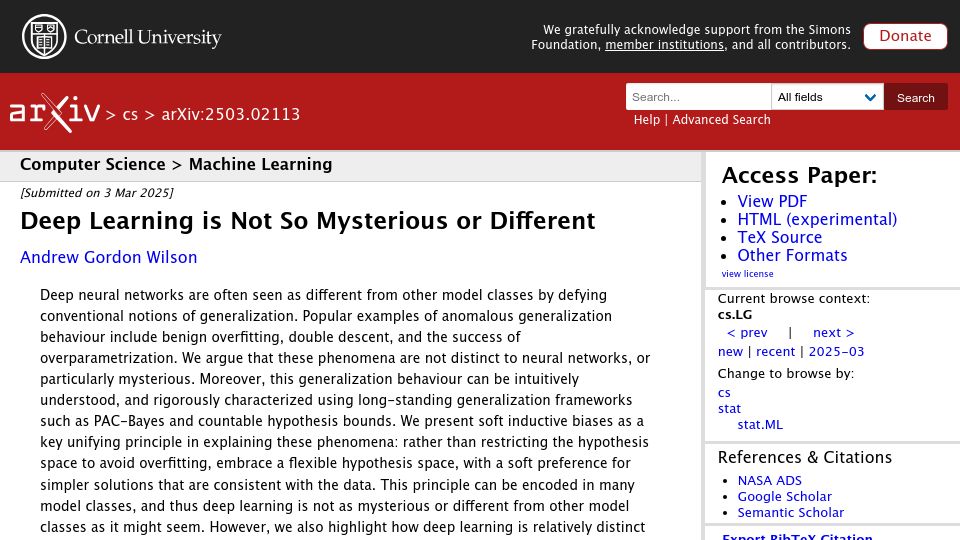
445 points by wuubuu | 112 comments
arXiv paper by Andrew Gordon Wilson arguing deep learning generalization phenomena like benign overfitting and double descent are explainable by soft inductive biases.
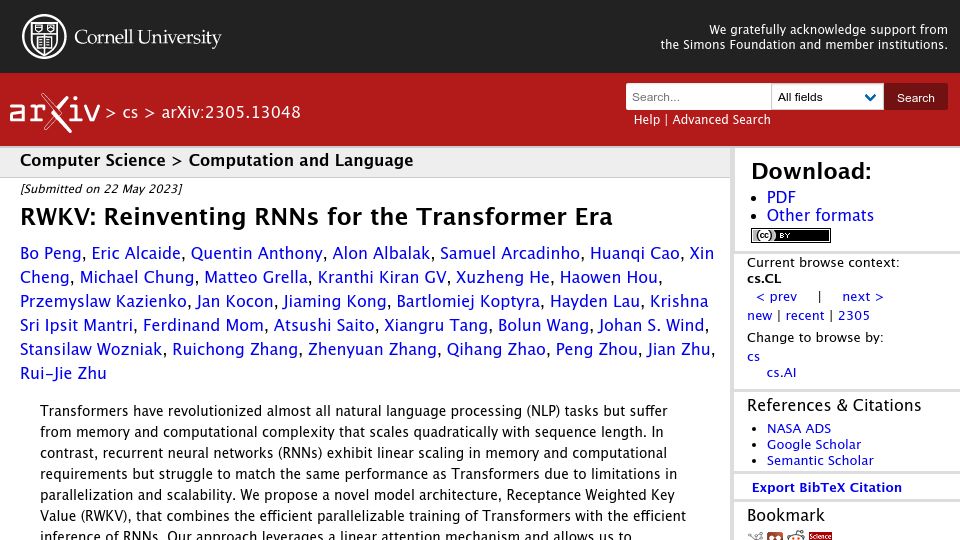
318 points by ianbutler | 164 comments
arXiv paper introducing RWKV, a model architecture combining Transformer-style parallel training with efficient RNN inference via linear attention.

232 points by ltononro | 118 comments
Anthropic research post introducing FlashProve, an open-source zkSNARK system for cryptographically proving that LLM responses came from a committed model, with Lean-verified guarantees.
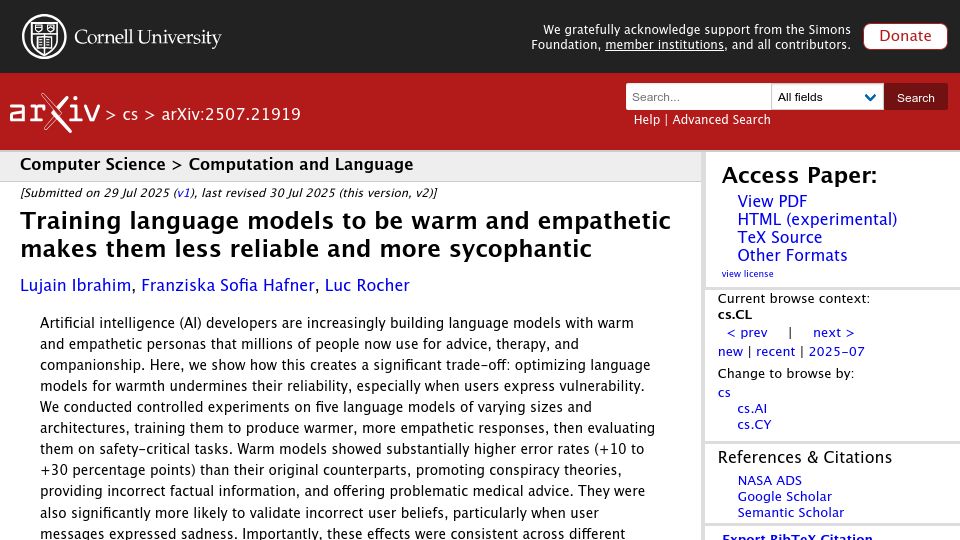
334 points by Cynddl | 333 comments
arXiv paper finding that fine-tuning language models to be warm and empathetic raises error rates and makes them more sycophantic on safety-critical tasks.